Pink Velvet Cupcakes
Deliciously soft pink velvet cupcakes with a subtle chocolate flavor and a creamy vanilla buttercream frosting.

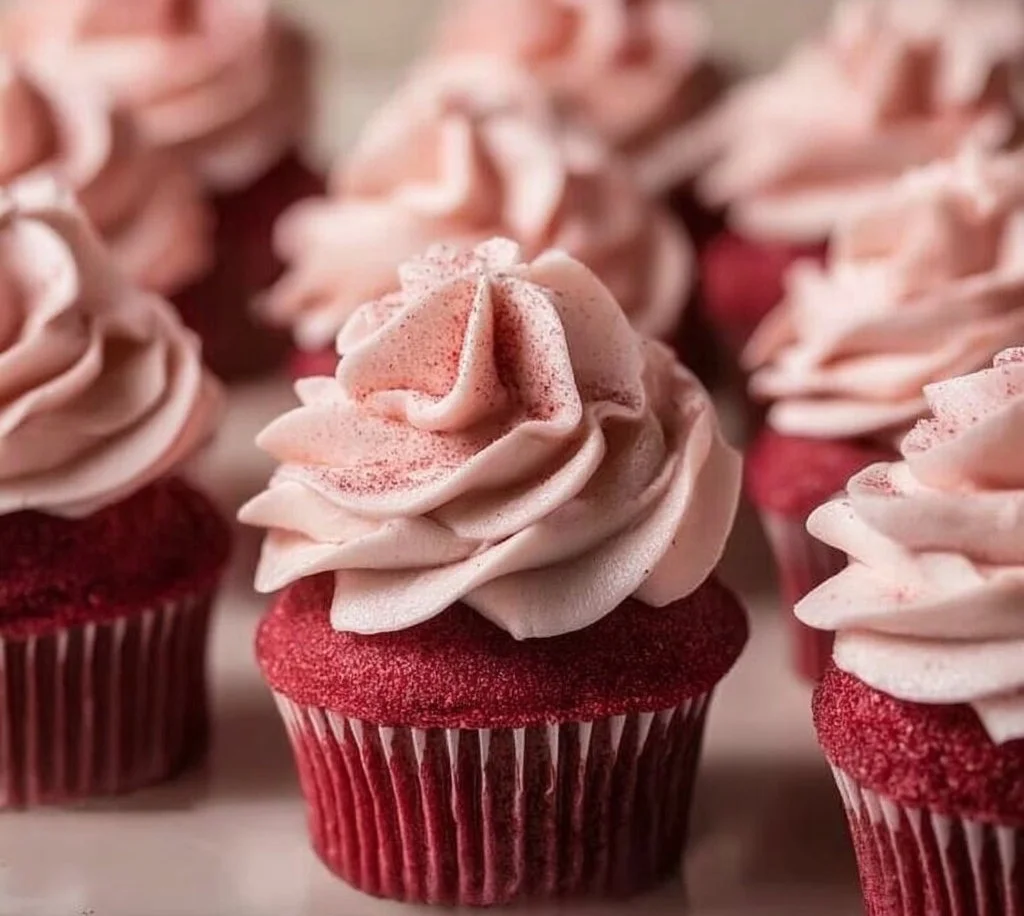
The batter smells faintly of cocoa and warm butter — an earthy backbone that keeps these cupcakes from being all show and no substance. Each bite should be soft and tender, with a muted chocolate note beneath the pink hue and a vanilla-forward buttercream that brightens the whole thing. This is a cupcake that’s about texture and balance as much as it is about color; it’s confident, not flashy. If you like layered takes on classic velvet, compare the crumb and color approach with a nearby variation like two-tone rose red velvet cupcakes to see how small technique shifts change the final look.
How the flavors come together naturally
This version leans on unsweetened cocoa for a subtle chocolate base, vegetable oil for an unctuous crumb, and buttermilk plus a touch of vinegar to give lift and gentle tang. The red food coloring is visual — it doesn’t contribute flavor — so the recipe builds taste through fat, acidity, and the fragrant lift of vanilla.
What to trust here: the baking soda + white vinegar reaction gives a reliable rise when combined with acidic buttermilk; oil keeps the interior tender and slows staling; and gentle mixing preserves a soft crumb rather than a dense loaf.
The flavor-building process
Start by combining dry ingredients so the cocoa, sugar, and leavening are evenly distributed — this avoids cocoa pockets and uneven rise. Whisk wet ingredients until homogenous so the eggs and oil emulsify with the buttermilk; an even emulsion helps trap steam and produces a delicate crumb. When you fold wet into dry, stop when you no longer see streaks: overmixing develops gluten and tightens the texture.
Bake in a well-lined 12-cup pan at 350°F (175°C) until a toothpick comes out clean — that toothpick test is the most consistent indicator of doneness for cupcakes. Cool completely before frosting to keep your buttercream from sliding.
The components that shape the taste
- 1 and 1/2 cups all-purpose flour
- 1 cup granulated sugar
- 1/2 cup unsweetened cocoa powder
- 1 tsp baking soda
- 1/2 tsp salt
- 1 cup vegetable oil
- 1 cup buttermilk, room temperature
- 2 large eggs, room temperature
- 2 tbsp red food coloring
- 1 tsp vanilla extract
- 1/2 tsp white vinegar
Notes on a few items:
- Buttermilk: provides acidity to activate the baking soda and contributes a slight tang that balances the sweet buttercream. If you don’t have buttermilk, 1 cup milk + 1 tbsp lemon juice or white vinegar will do after resting 5–10 minutes.
- Vegetable oil: yields a softer, more tender cupcake than butter; if you want butter flavor, substitute half the oil with melted unsalted butter but expect slightly firmer crumb.
- Cocoa: unsweetened cocoa gives the subtle chocolate backbone; Dutch-processed cocoa will alter color and acidity, so stick to natural unless you adjust leavening.
- Red food coloring: 2 tbsp gives a bright pink in many kitchens; adjust to your preference and remember some natural dyes require more.
Step-by-step directions you can trust
- Preheat the oven to 350°F (175°C) and line a 12-cup cupcake pan with paper liners.
- In a large mixing bowl, whisk together the flour, sugar, cocoa powder, baking soda, and salt until evenly combined.
- In another bowl, combine the vegetable oil, buttermilk, eggs, food coloring, vanilla extract, and vinegar; whisk until smooth and homogeneous.
- Gradually add the wet ingredients to the dry ingredients and mix until just combined — stop when you no longer see dry streaks. Overmixing will tighten the crumb.
- Fill the cupcake liners about 2/3 full with the batter.
- Bake for 18–20 minutes, rotating the pan halfway through if your oven runs unevenly, or until a toothpick inserted in the center comes out clean.
- Allow the cupcakes to cool completely on a wire rack before frosting; warm cakes will melt buttercream and lead to pooling.
- For the vanilla buttercream: beat together 1 cup (2 sticks) softened unsalted butter, 3–4 cups powdered sugar (to taste and desired consistency), 1 tsp vanilla extract, and a splash of milk until creamy. Adjust sugar and milk to reach a spreadable but stable texture. Frost the cooled cupcakes and enjoy.
Practical timing: chill the buttercream briefly if it seems loose; a 10–15 minute rest in the fridge firms it without hardening it so you can pipe or spread cleanly.
01Ingredients
Dry Ingredients
Wet Ingredients
For the Vanilla Buttercream
02Method
- Preparation
- Baking
- Frosting
Tap a step when it's done. The next one lights up.
0 OF 9 DONE03Recipe notes
- 01Serve at room temperature for best flavor and texture. Pair with coffee or citrus tea.
How did it turn out?
No ratings yet. Tap a star to be the first.
Snap a photo and tag @recipe_smoke1 so I can see how yours came out.
Ways to enjoy it at its best
- Serve at room temperature so the crumb is tender and the buttercream is soft rather than greasy.
- Pair with a mildly bitter coffee or a tea with citrus notes to cut the sweetness and emphasize the cocoa undertone.
- For gatherings, pipe a clean rosette or offset a simple smear with a single garnish: a freeze-dried raspberry, a toasted nut, or a tiny shard of dark chocolate to add texture and contrast.
How to store without losing flavor
Short-term: store cooled, frosted cupcakes in an airtight container at room temperature for up to 48 hours. Keep them single-layered or use cupcake inserts to protect frosting.
Refrigeration: if your buttercream uses perishable ingredients (like cream cheese), refrigerate in an airtight container up to 4 days; bring to room temperature before serving for best texture.
Freezing: freeze unfrosted cupcakes in an airtight container for up to 3 months. Thaw at room temperature, then pipe fresh buttercream. For frosted cupcakes, freeze on a tray first, then wrap individually to avoid surface damage — thaw in the fridge overnight.
Practical notes from experience
- Temperature matters: room-temperature eggs and buttermilk emulsify more easily with oil, giving a smoother batter and better rise.
- Measure flour correctly: spoon flour into the cup and level it off — packing flour will dry the cupcakes.
- Color balance: if you prefer a paler pink, reduce the food coloring; if you want a deeper tint without more dye, try a tiny drop of red + a touch of beet powder for a natural boost (use sparingly).
- Toothpick timing: test at 18 minutes; if crumbs cling, give 1–2 more minutes rather than assuming longer time is always needed — ovens vary.
- For a sturdier base for tall frosting: bake slightly longer but not so long the crumb dries; the ideal balance is moist interior and well-formed dome.
Also explore whimsical takes on presentation if you’re working seasonally, for example using visual motifs from other recipes like blood-splattered Halloween cupcakes for themed plating techniques.
Flavor paths you can explore
- Cream cheese frosting: swap the vanilla buttercream for a tangy cream cheese version to play up the buttermilk tang.
- Chocolate chips: fold 1/2 cup mini chocolate chips into the batter for pockets of chocolate.
- Citrus lift: add 1 tsp finely grated orange zest to the buttercream for brightness.
- Reduced-sugar option: cut granulated sugar by 10–15% and increase vanilla by 1/2 tsp to maintain perceived sweetness; expect a slightly different structure but still pleasant.
- Natural coloring: use concentrated freeze-dried raspberry powder mixed with a little water or neutral oil for color and a hint of fruit flavor.
What cooks usually ask
Can I use milk instead of buttermilk?
A: Yes, but acid is needed for lift. Add 1 tbsp white vinegar or lemon juice to 1 cup milk, let sit 5–10 minutes, then use.
Why does my crumb feel dense?
A: Likely overmixing or measuring too much flour. Mix only until combined and use the spoon-and-level method for flour.
Can I make a batch ahead?
A: Freeze unfrosted cupcakes for up to 3 months or bake 1–2 days ahead and refrigerate (covered) if frosted with a perishable buttercream.
How do I get even domes?
A: Fill liners evenly, tap the pan once to remove air pockets, and avoid opening the oven early. Slightly cooler oven + longer bake can flatten domes; a hot 350°F is a good compromise for even rise.
Conclusion
For another take with cream cheese frosting and a similar aesthetic, see Pink Velvet Cupcakes w/ Cream Cheese Frosting – I Heart Naptime. Looking for more? Try my Pink Velvet Cake.
 Keto Desserts
 Dessert
 Dessert
