Japanese Cotton Cheesecake
A delicate and airy Japanese cheesecake that melts in your mouth, perfect for any special occasion or as a light dessert after a meal.

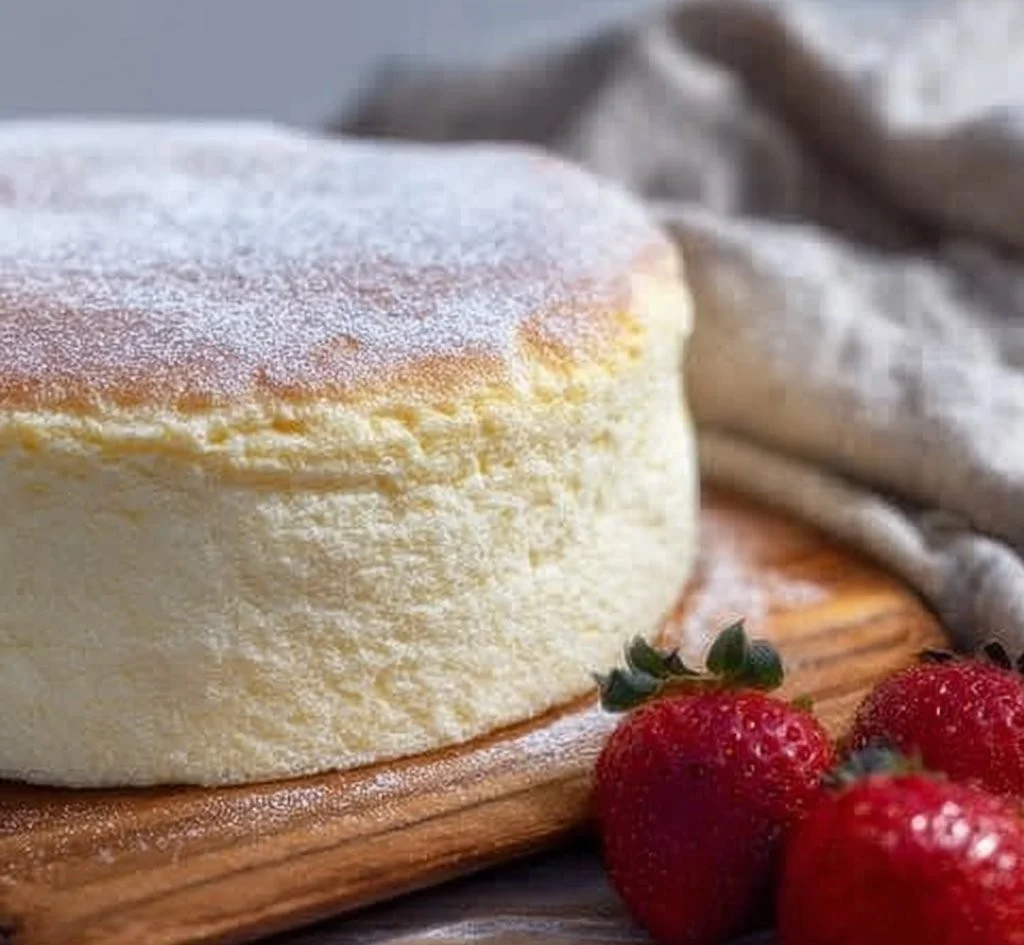
I’ve been making this light-as-air Japanese cheesecake for years whenever I want a dessert that feels special but isn’t fussy. It’s the kind of cake that fluffs up like a souffle, keeps a tender, creamy center, and pairs beautifully with fresh berries or a bright apricot glaze. If you like desserts that balance delicate texture with subtle tang, this is the one to reach for—think brunch showstopper or a gentle finish to a dinner party. For a whimsical serving idea, I once plated slices alongside mini fruit tacos inspired by a fun recipe I bookmarked, and the combo disappeared fast: apple cheesecake tacos.
Why you’ll love this dish
Japanese cheesecake stands out because it’s neither a dense American-style cheesecake nor a straight-up souffle. It’s airy, mildly sweet, and melts on the tongue. Make it when you want an elegant dessert with a light profile—perfect for spring brunches, celebratory dinners, or when someone requests “a cheesecake that isn’t too heavy.”
Reasons to try it:
- Lighter than traditional cheesecakes, so ideal after a big meal.
- Requires common pantry ingredients and techniques you can learn fast.
- Great for make-ahead entertaining; it keeps shape and flavor after refrigeration.
How this recipe comes together
Step-by-step overview before you start:
- Soften and melt the cream cheese with butter and cream to create a smooth base.
- Fold in egg yolks and sifted cake flour for structure and richness.
- Whip egg whites into a glossy meringue with sugar, then gently fold into the base to create lift.
- Bake the batter in a water bath (bain-marie) to ensure even, gentle cooking.
- Cool slowly to avoid sinking; glaze and dust before serving.
This quick overview sets expectations: you’ll separate eggs, make two mixtures (base and meringue), combine gently, and bake in a low, moist environment.
What you’ll need
- 6 large eggs, separated (each egg ≈ 50 g shell-on). Tip: separate chilled eggs, then bring whites to room temp for better meringue.
- 8 oz (225 g) cream cheese, preferably softened. Neufchâtel can be used for lower fat but expect a slightly looser texture.
- 1/4 cup heavy cream (or full-fat milk). Heavy cream adds silkiness.
- 4 tbsp unsalted butter, cut into pieces and softened.
- 1/2 cup cake flour (fluffed, spooned, leveled). Cake flour gives a tender crumb.
- 1 tbsp lemon zest (optional) — brightens the flavor.
- 1 1/2 tsp vanilla extract (optional) — complements the cheese.
- 1/3 cup granulated sugar — for the meringue.
- 2 tsp lemon juice (≈ 1/3 lemon) — stabilizes the meringue and lifts flavor.
- Powdered sugar for dusting.
- Apricot jam, slightly warmed for glazing.
- Fresh berries and sweetened whipped cream to serve.
Substitutions/notes:
- If you don’t have cake flour, substitute 1/2 cup all-purpose minus 2 tbsp cornstarch.
- For dairy-free swaps, this recipe is tricky because the structure relies on cream cheese; consider a tofu-based or vegan cheesecake recipe instead.
Step-by-step instructions
Prepare equipment:
- 8-inch (20 cm) round springform pan or a similar loose-bottom pan. Line the bottom and sides with parchment (extend the sides if possible).
- A large roasting pan or baking tray to hold a water bath.
- Electric mixer for the meringue.
- Fine sieve for flour.
Make the base batter:
- Preheat the oven to 320°F (160°C). Place an oven rack in the lower third.
- In a heatproof bowl over a simmering water bath (or briefly in a microwave), beat together the cream cheese, butter, and heavy cream until smooth and lump-free. Remove from heat.
- Whisk in egg yolks one at a time until combined. Stir in lemon zest and vanilla if using.
- Sift the cake flour over the mixture and fold gently until just combined. Set aside.
Prepare the meringue:
- In a clean, dry bowl, whisk egg whites with lemon juice on medium speed until foamy.
- Gradually add granulated sugar while whisking, increasing speed to high. Whisk until glossy, stiff peaks form (but avoid overwhipping—peaks should be smooth).
- Fold about one-third of the meringue into the cream cheese base to loosen it. Then gently fold the remaining meringue in two additions. Use a spatula and lift from the bottom—keep as much air as possible.
Bake the cheesecake:
- Pour batter into the prepared pan and smooth the top. Tap gently to remove large air pockets.
- Set the pan inside the larger roasting pan. Pour hot (not boiling) water into the outer pan so it reaches halfway up the sides of the cake pan.
- Bake at 320°F (160°C) for 60–75 minutes. The surface should be golden and a skewer inserted near the center will come out mostly clean with a few moist crumbs.
- Turn off the oven and crack the door open slightly. Let the cheesecake cool inside the oven for 30–60 minutes—this gradual cooling prevents cracks and excessive sinking.
- Remove from oven, lift out of the water bath, and cool to room temperature. Refrigerate at least 4 hours, ideally overnight.
Serve:
- Warm a few tablespoons of apricot jam and brush lightly over the top for sheen and a subtle glaze.
- Dust with powdered sugar and serve with fresh berries and a dollop of sweetened whipped cream.
Light and Airy Japanese Cheesecake
- Prep
- 30 MIN
- Cook
- 1 HR 15 MIN
- Total
- 1 HR 45 MIN
- Serves
- 8
01Ingredients
Cheesecake Base
02Method
- Prepare Equipment
- Make the Base Batter
- Prepare the Meringue
- Bake the Cheesecake
- Serve
Tap a step when it's done. The next one lights up.
0 OF 17 DONE03Recipe notes
- 01For best results, serve with a small quenelle of whipped cream and mixed berries. Store leftovers tightly wrapped in the fridge for up to 4 days or freeze individual slices for up to 1 month.
How did it turn out?
No ratings yet. Tap a star to be the first.
Snap a photo and tag @recipe_smoke1 so I can see how yours came out.
Best ways to enjoy it
How to plate and pair:
- Slice with a thin, hot knife (dip in hot water and wipe between cuts) to keep edges clean.
- Serve with a small quenelle of whipped cream and a scattering of mixed berries for acidity and color.
- Pair with light teas (sencha or jasmine), fruity pear spritzers, or sparkling pink lemonade for a celebratory touch.
- For brunch, serve small slices with tea sandwiches or fruit salad.
For more playful dessert ideas that pair well with cheesecake textures, check out this riff on bite-sized cheesecakes: Berry Swirl Cheesecake Bites.
Storage and reheating tips
Storage:
- Refrigerate: Tightly wrap the cooled cheesecake (or keep in an airtight container) and store in the fridge for up to 4 days.
- Freeze: Wrap individual slices in plastic, then foil, and freeze up to 1 month. Thaw in the fridge overnight.
Reheating:
- For a slightly warmed slice, set oven to 275°F (135°C) and heat for 8–10 minutes. Avoid microwave if you want to preserve the airy texture—microwaving makes it dense and rubbery.
Food safety:
- Because this uses many eggs, refrigerate within two hours of baking and consume within the recommended storage times.
Creative twists
- Citrus lift: Replace lemon zest with grated yuzu or orange for a different bright note.
- Matcha: Fold 1–2 tsp matcha powder into the flour for earthy color and flavor.
- Pumpkin spice: In autumn, blend canned pumpkin into the base (reduce cream slightly) and add warm spices—see seasonal inspiration like this pumpkin spice take on Japanese cheesecake for ideas.
- Chocolate ribbon: Swirl a thin chocolate ganache into the base before folding in meringue.
- Mini cakes: Bake in ramekins for individual servings; reduce baking time to 30–40 minutes.
Common questions
Why did my cheesecake sink after baking?
Most sinks occur from overmixing the meringue (deflating air) or sudden temperature changes. Gently fold and cool slowly in the oven with the door cracked.
Can I make this ahead for a party?
Yes—this cheesecake improves after a night in the fridge. Bake a day ahead, glaze and garnish just before serving.
Can I use all-purpose flour instead of cake flour?
Yes—substitute 1/2 cup all-purpose minus 2 tbsp plus 2 tbsp cornstarch to mimic cake flour’s tenderness.
Is there an egg-free version?
Not that preserves the same texture—eggs are essential for both structure and lift. For egg-free alternatives, look for vegan cheesecake recipes using agar and aquafaba.
How do I fix a cracked top?
Light surface cracks can be hidden with powdered sugar, jam glaze, or a thick berry compote. Preventatively, avoid overbaking and cool gradually.
Conclusion
If you want a trusted, light cheesecake that’s impressive yet approachable, this Japanese cheesecake recipe delivers consistent results when you follow the folding and water-bath steps. For a well-tested, detailed version from a seasoned baker, see The Best Home-Baked Japanese Cheesecake Recipe by Kat Lieu. You might also like my Fluffy Japanese Cotton Cheesecake Cupcakes.
 Dessert
 Dessert
 Dessert
