Japanese Strawberry Cake
A delicately balanced cake featuring a light sponge, softly whipped cream, and fresh strawberries, perfect for celebrations and gatherings.

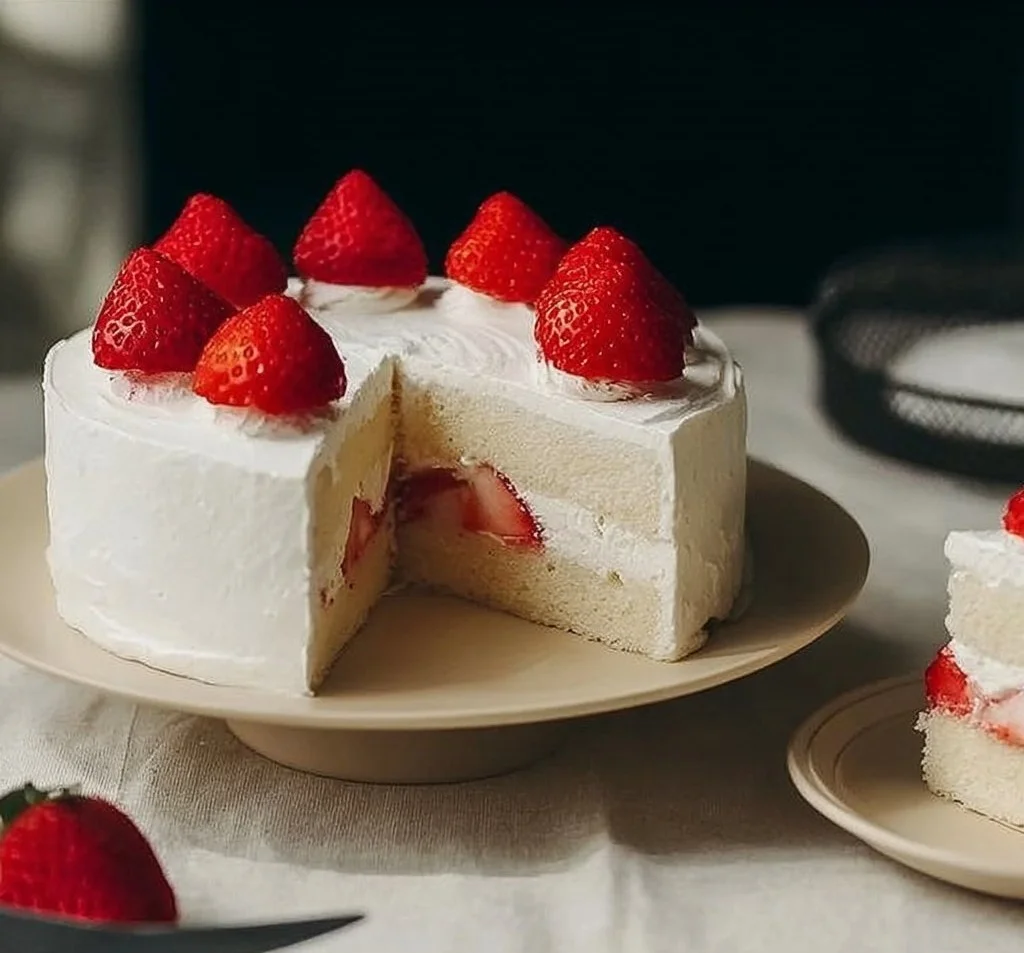
I remember the first time I made this Japanese-style strawberry cake: the sponge was impossibly light, the cream whisper-soft, and the strawberries bright and not too sweet. It’s the kind of cake families bring to birthdays, tea time, or a spring picnic—delicate, not cloying, and crowd-pleasing. If you enjoy light sponge cakes, you might also like my riff on a chocolate-covered strawberry cake for a more indulgent twist: chocolate-covered strawberry cake.
Why you’ll love this dish
This cake is the definition of balance: an airy sponge, lightly sweetened whipped cream, and fresh strawberries that add texture and brightness. It’s not overly sweet, so the fruit and cream shine. Perfect for occasions where you want something elegant but not fussily complex—think birthdays, afternoon tea, or a spring celebration.
Reasons to try it:
- Light enough to enjoy after a big meal.
- Uses everyday ingredients but delivers a restaurant-style finish.
- Great for people who prefer less-sweet desserts.
- Easy to scale up or turn into mini cakes or a roll.
How this recipe comes together
Step-by-step overview:
- Make a thin, moist sponge by folding whipped egg whites into a yolk-based batter gently.
- Macerate half the strawberries so they become saucy and sweet.
- Whip cream (with optional gelatin for stability) and fold in the macerated strawberries if you like a looser filling.
- Slice and layer: sponge, cream, sliced strawberries, repeat, then frost lightly.
If you want a slightly different assembly or a roll version, the texture and technique are close to how Japanese sweets like dorayaki are built—see a simple pancake-style variant here: easy dorayaki recipe.
What you’ll need
Ingredient list (metric and common measures):
- 80 g (1/3 cup) whole milk
- 50 g (3 1/2 tablespoons) unsalted butter
- 75 g (1/2 cup + 1/2 tablespoon) cake flour (substitute: 70 g all-purpose flour + 5 g cornstarch)
- 4 large egg yolks
- 4 large egg whites
- 70 g (5 1/2 tablespoons) sugar (caster sugar preferred)
- 12 oz to 1 lb (340 g to 450 g) strawberries, divided (choose ripe but firm)
- 1 1/2 teaspoons sugar (for macerating)
- 280 g (10 oz) heavy whipping cream
- 2 tablespoons confectioners’ sugar
- 3/4 teaspoon gelatin (optional, for cream stability)
- 2 tablespoons cold water (optional, to bloom gelatin)
- 2 tablespoons sugar (for maceration syrup)
- 3 tablespoons hot water (for dissolving that sugar)
Notes/substitutions:
- Cake flour gives the softest crumb; if unavailable, use the AP + cornstarch swap above.
- Caster sugar is finer and dissolves faster in egg whites, but granulated works too.
- Gelatin is optional: use it if you need the cake to hold up for several hours or in warm settings.
Step-by-step instructions
Prepare the cake
- Preheat the oven to 170°C (340°F) and line a 6–7 inch round pan (or 8-inch if you prefer thinner layers) with parchment.
- Warm milk and butter together until butter melts; set aside to cool slightly.
- Sift cake flour and set aside.
- Whisk yolks in a bowl until smooth. Add half the sugar to the yolks and whisk until pale. Stir in the warm milk-butter mixture and the sifted flour; mix just until combined.
- In a separate clean bowl, beat egg whites to soft peaks. Gradually add remaining sugar and beat to glossy, firm peaks.
- Fold one-third of the whipped whites into the yolk batter to loosen it. Gently fold in remaining whites in two additions—use wide strokes to keep air in the batter.
- Pour into the prepared pan and bake 18–22 minutes (time depends on pan size). A skewer should come out clean and the top should spring back. Cool on a rack.
Prepare the macerated strawberries
- Reserve a handful of whole strawberries for decoration. Slice the rest.
- Toss sliced strawberries with 1 1/2 teaspoons sugar and let sit 10–20 minutes until juicy.
- For a lightly sweet syrup, dissolve 2 tablespoons sugar in 3 tablespoons hot water and fold into the macerated berries if you want more liquid.
Prepare the cream
- If using gelatin: sprinkle 3/4 teaspoon gelatin over 2 tablespoons cold water and let bloom 5 minutes. Heat briefly until dissolved and cool slightly.
- Chill the mixing bowl and beaters for best results.
- Whip 280 g heavy cream with 2 tablespoons confectioners’ sugar to soft peaks. If using gelatin, stream the cooled dissolved gelatin into the cream while whipping to stabilize and continue to medium peaks.
Assemble the cake
- If you baked a single layer, slice horizontally into two or three thin layers with a serrated knife. Keep layers level.
- Place the bottom layer on a cake board. Spread a thin layer of whipped cream. Add a ring of sliced strawberries near the edge, then fill the center with macerated berries and a bit of syrup for moisture.
- Repeat layers, finishing with a thin crumb coat of cream. Chill 15–30 minutes to set.
- Apply a final smooth layer of cream. Arrange reserved whole strawberries on top. Chill at least 1 hour before serving to let the cake settle.
Japanese-Style Strawberry Cake
- Prep
- 30 MIN
- Cook
- 22 MIN
- Total
- 52 MIN
- Serves
- 8
01Ingredients
For the sponge
For the filling
For the cream
For decoration
02Method
- Prepare the cake
- Prepare the macerated strawberries
- Prepare the cream
- Assemble the cake
Tap a step when it's done. The next one lights up.
0 OF 17 DONE03Recipe notes
- 01Store covered for up to 2 days in the refrigerator. Best enjoyed the day of assembly or the following day.
How did it turn out?
No ratings yet. Tap a star to be the first.
Snap a photo and tag @recipe_smoke1 so I can see how yours came out.
How to plate and pair
Best ways to enjoy it:
- Serve chilled, not cold; 10–15 minutes at room temperature brings out flavor.
- Pair with a light green tea or a floral white tea to complement the strawberry acidity.
- For a celebratory touch, dust with a little confectioners’ sugar or brush whole berries with warmed apricot jam for shine.
- For smaller servings, make six mini cakes in ramekins or use the batter for a layered tray bake.
How to store & freeze
Keeping leftovers fresh:
Refrigerator: Store covered for up to 2 days. The cream softens the sponge over time—best eaten the day of assembly or the next day.
Freezing: You can freeze an unfilled sponge for up to 1 month, wrapped tightly. Thaw in the fridge before assembling. Do not freeze a fully assembled cake with fresh fruit; strawberries release water and make the cake soggy.
Food safety: Keep the cake refrigerated below 4°C (40°F) because of the whipped cream and fresh fruit.
Creative twists
Recipe variations
- Lemon-berry: Add 1 teaspoon lemon zest to the yolk batter and a teaspoon to the whipped cream for brightness.
- Matcha: Fold 1–2 teaspoons matcha into the dry flour for a green tea sponge; pair with slightly sweetened whipped cream.
- Vegan-ish swap: Use aquafaba in place of egg whites and coconut cream whipped as the filling—results vary, and structure is softer.
- Mini trifles: Layer cubed sponge, macerated berries, and cream in glasses for single-serve portions.
Common questions
Can I make this ahead?
A: Yes. Bake the sponge up to 2 days ahead (wrap and refrigerate) or freeze unfilled layers up to 1 month. Assemble up to a day before serving if you want maximum freshness—any earlier and the sponge may absorb too much moisture.
Is gelatin necessary?
A: No. Gelatin stabilizes the cream for hot environments or longer displays. If serving within a few hours in a cool place, skip it.
How do I fix a dense sponge?
A: The most common culprits are over-folding (knocks out air), under-whipped egg whites, or batter deflated by rough handling. Start again, ensuring whites form glossy peaks and fold gently.
Can I use frozen strawberries?
A: Thawed frozen strawberries release excess water and can make the cake soggy. Use them only if cooked down into a jam-like filling or reduced to a thicker compote first.
What pan size should I use?
A: A 6–8 inch round pan works well; a smaller pan gives taller layers. Adjust baking time—smaller pan, longer bake.
Conclusion
If you want more background and alternate proportions for a classic approach, this version from Japanese Strawberry Cake – Omnivore’s Cookbook is an excellent reference. Looking for more? Try my Japanese Fruit Sandwich (Strawberry Sando).
 Cakes
Cakes Cakes
Cakes Cakes
Cakes
