Baked Salmon Sushi Bowl
A quick and delicious salmon sushi bowl, featuring seared salmon, creamy avocado, and fresh cucumber, topped with a spicy mayo and furikake for a flavorful meal.

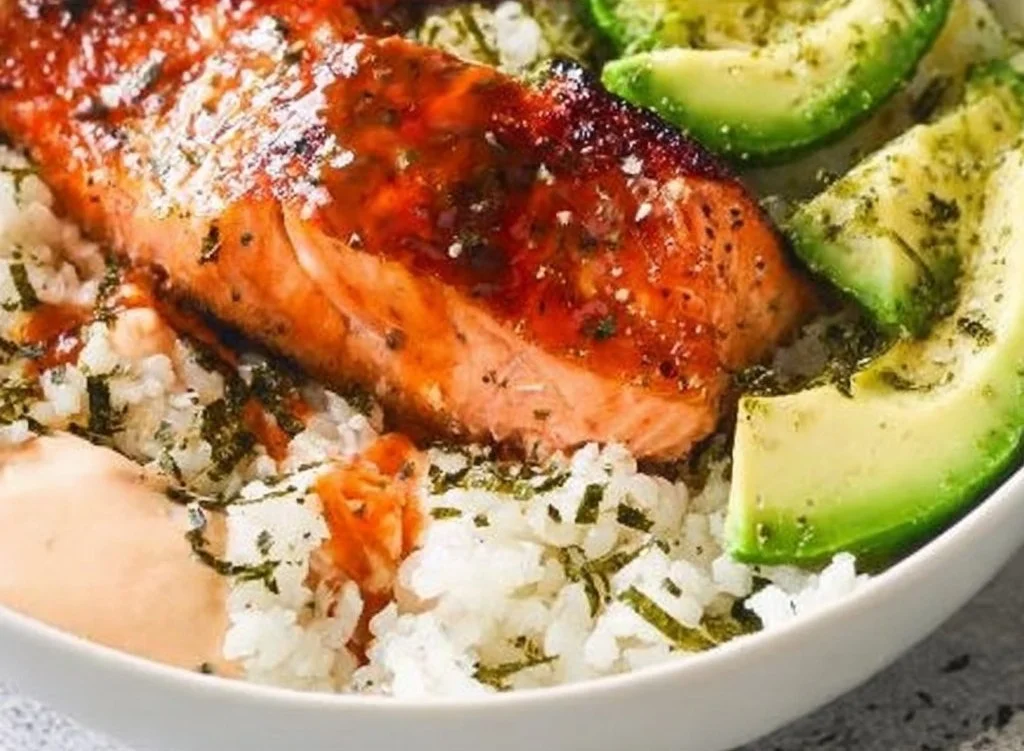
I make this baked salmon sushi bowl when I want something that feels indulgent but comes together fast. It hits the best parts of a sushi bar — tender, slightly sweet-salty salmon, creamy avocado, crisp cucumber, and furikake umami — without raw fish or a long ingredient list. If you’re a fan of rice bowls that are both comforting and bright, you’ll appreciate how easy this dish is to scale for weeknight dinners or casual weekend lunches. If you enjoy similar salmon bowls, you might like Bang Bang Salmon Bowls for another spicy-sweet option.
Why you’ll love this dish
This bowl is a perfect weeknight showstopper. It’s quick to prep, uses pantry-friendly sauces, and feels restaurant-level with minimal effort. The salmon is seared for a crust and finished in the oven so you get both flavor and perfectly even doneness. Use it when you want a nutritious family meal, a make-ahead lunch, or an easy meal for entertaining.
Highlights:
- Ready in about 30–40 minutes (active time ~15–20 minutes).
- Kid-friendly with adjustable spice (reduce chili garlic sauce).
- Easy to adapt for gluten-free diets (use tamari).
- Balanced macros: protein-rich salmon, healthy fats, and carbs from rice.
How this recipe comes together
Quick overview:
- Marinate the salmon lightly with a soy and chili-garlic glaze.
- Sear in a hot skillet to develop color.
- Finish in a 400°F oven until the internal temperature reaches 140°F.
- Whisk spicy mayo while the salmon cooks.
- Build bowls with warm rice, sliced avocado, cucumber, flaked salmon, and furikake.
This approach ensures the salmon is caramelized on the outside and moist inside, while the spicy mayo and furikake bring a classic sushi-bowl finish.
What you’ll need
- 4 salmon filets (4–6 oz each) — skin-on or skinless works; skin-on crisps nicely.
- Kosher salt and freshly ground black pepper.
- 4–5 tablespoons soy sauce (substitute tamari for gluten-free).
- 1–2 teaspoons chili garlic sauce (or Sriracha to taste).
- 1–2 teaspoons avocado oil (olive oil is an okay substitute).
- 1/2 cup mayonnaise.
- Additional 1–2 teaspoons chili garlic sauce for the spicy mayo (adjust to taste).
- 4 cups cooked rice of your choice (short-grain sushi rice, jasmine, or brown rice).
- 2 avocados, sliced.
- 2 cups English cucumber, sliced (seeds removed if desired).
- Furikake seasoning for garnish.
- Extra soy sauce or tamari for serving.
Notes/substitutions: use low-sodium soy if you’re sensitive to salt. For a lighter mayo, swap half the mayo for Greek yogurt (flavor will be tangier).
Step-by-step instructions
- Preheat the oven to 400°F.
- Pat salmon dry with a clean paper towel. This helps the glaze stick and creates a better sear.
- In a small bowl mix 4–5 tablespoons soy sauce with 1–2 teaspoons chili garlic sauce. Taste and adjust heat.
- Lightly season both sides of the salmon with kosher salt and black pepper. Generously brush the soy-chili mixture over the top.
- Heat a large cast-iron skillet over medium-high heat. Add 1–2 teaspoons avocado oil and swirl to coat.
- Place salmon in the skillet, skin-side up if the skin is on. Sear for 2–4 minutes until deeply browned.
- Flip the fillets, turn off the stovetop burner, then transfer the skillet (uncovered) to the middle rack of the preheated oven.
- Bake 10–14 minutes, or until the thickest part reaches 140°F. Use an instant-read thermometer for accuracy.
- Meanwhile, whisk 1/2 cup mayo with 1–2 teaspoons chili garlic sauce in a small bowl. Taste and add more chili garlic sauce if you like it spicier.
- Divide warm rice among four bowls. Top with sliced avocado and cucumber. Flake or place whole salmon fillets over the rice. Drizzle with spicy mayo and sprinkle furikake. Serve extra soy or tamari on the side.
01Ingredients
For the Salmon
For the Spicy Mayo
For the Bowl
02Method
- Preparation
- Cooking
- Assembly
Tap a step when it's done. The next one lights up.
0 OF 11 DONE03Recipe notes
- 01Use low-sodium soy if you’re sensitive to salt. For a lighter mayo, swap half the mayo for Greek yogurt for a tangier flavor.
How did it turn out?
No ratings yet. Tap a star to be the first.
Snap a photo and tag @recipe_smoke1 so I can see how yours came out.
Best ways to enjoy it
- Plating: Spoon rice into the center of shallow bowls, fanning avocado slices around one side and cucumber on the other. Lay salmon on top or flake it across the bowl for easier eating. Finish with a zigzag of spicy mayo and a generous sprinkle of furikake.
- Pairings: A simple miso soup, edamame, or a crisp seaweed salad complements the bowl. For drinks, try green tea or a citrusy soda.
- Occasion: Great for weeknights, casual dinner parties, or meal-prep lunches (assemble just before eating).
Storage and reheating tips
Refrigerator: Store salmon and bowls separately. Cooked salmon and rice keep well for up to 3 days in airtight containers. Avocado will brown, so store sliced avocado with a little lemon juice or add fresh before serving.
Freezing: Cooked salmon freezes okay for up to 2 months if vacuum sealed; texture will change slightly. Rice freezes well, too — thaw in the fridge overnight. Avocado is not recommended for freezing in this application.
Reheating: Reheat salmon gently in a 300°F oven for 8–10 minutes or in a covered skillet over low heat to avoid drying out. Microwave rice with a splash of water and cover to steam for best results.
Food safety: Always reheat leftovers to 165°F. Discard any perishable foods left out at room temperature longer than 2 hours.
Creative twists
- Poke-style: Swap mayo for a ponzu vinaigrette and add pickled ginger, scallions, and sesame oil for a poke-inspired bowl.
- Low-carb: Serve over cauliflower rice or a bed of mixed greens.
- Vegan swap: Replace salmon with roasted marinated tofu or tempeh; use vegan mayo.
- Teriyaki glaze: Substitute the soy-chili mix for a thicker teriyaki glaze (reduce soy and add alcohol-free mirin + brown sugar to glaze).
- Crunch boost: Add crispy shallots, toasted sesame seeds, or crushed nori chips for texture.
Your questions answered
How long does this take from start to finish?
A: Plan on 30–40 minutes total. Active time is about 15–20 minutes (searing, glazing, and prepping toppings), and oven time is 10–14 minutes.
Can I use frozen salmon?
A: Yes — thaw it fully in the refrigerator overnight, pat dry, and proceed. Patting dry is crucial to get a good sear.
Is 140°F a safe serving temperature for salmon?
A: Yes. Many chefs aim for 125–130°F for medium-rare textures, but the recipe specifies 140°F for fully cooked, flaky salmon that’s safe and preferred by many. Use an instant-read thermometer to be precise.
Can I make the spicy mayo ahead?
A: Absolutely. Spicy mayo stores refrigerated for up to 4 days. Mix more mild at first; flavor can intensify after chilling.
Can I swap the rice?
A: You can. Short-grain rice gives a classic sushi-bowl texture, but jasmine, brown rice, or even quinoa work fine.
Conclusion
This baked salmon sushi bowl is a fast, flavorful weeknight winner that balances simple technique with big flavor. For more ideas, check out The Defined Dish’s Baked Salmon Sushi Bowls and my Baked Salmon in Foil.
 Dinner Bowls
 Dinner Bowls
 Dinner Bowls
