Korean Spinach Salad
A quick and bright Korean banchan made with blanched spinach, garlic, sesame oil, and soy sauce, delivered in under 10 minutes for a flavorful vegetable side.

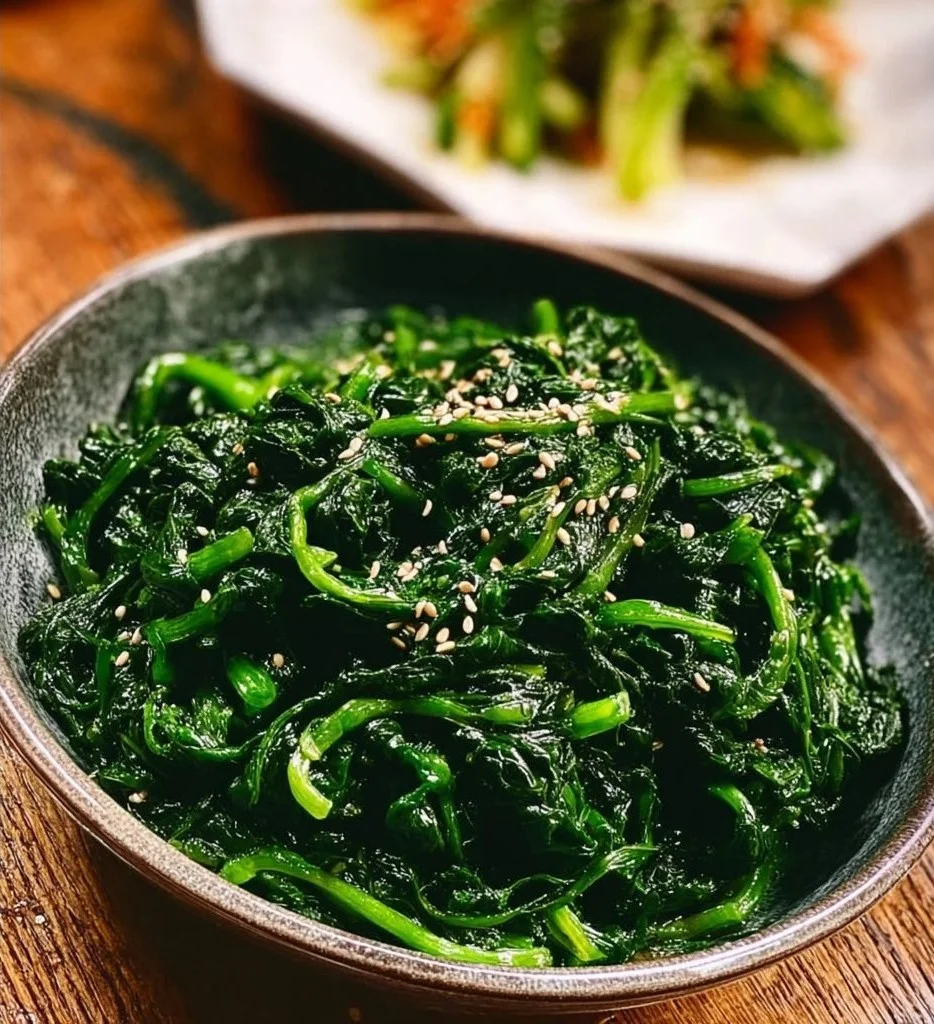
I’ve made this Korean spinach salad (sigeumchi namul) more times than I can count — it’s a quick, bright banchan that livens up weeknight dinners and balances richer mains. Blanched spinach, fragrant sesame oil, a hit of garlic and soy: simple ingredients that come together in under 10 minutes to deliver authentic, deeply savory flavor. If you like bold, clean vegetable sides, this one becomes a regular in my rotation. For a seasonal spin on leafy greens, I sometimes pair it with a sweeter salad like the festive cranberry spinach salad when entertaining.
Why you’ll love this dish
This namul is tiny-effort, big-reward:
- Ready in about 10 minutes — perfect for busy weeknights.
- Very budget-friendly: spinach, pantry staples, and a few condiments.
- Flexible: makes an excellent vegan or vegetarian side (omit chili paste if needed).
- Authentic Korean banchan: bright, nutty, and savory — it counters fatty mains nicely.
Preparing Korean Spinach Salad (Sigeumchi Namul)
Quick process overview so you know what to expect:
- Clean and briefly blanch the spinach to wilt and preserve color.
- Shock in cold water and squeeze out excess moisture.
- Form the spinach into tight balls, cut to make manageable bundles, then season.
- Choose savory or spicy seasoning, mix thoroughly, and finish with sesame seeds and green onion.
This sequence keeps the texture tender but not mushy, and the concentrated squeeze step prevents watery dressing.
What you’ll need
- 1.5 lb fresh spinach (leave stems on initially, then trim) — baby spinach works in a pinch but slightly different texture.
- 4 cloves garlic, minced (divided)
- 4 tbsp soy sauce (substitute tamari for gluten-free)
- 4 tbsp sesame oil (toasted sesame oil preferred)
- 1 green onion, chopped (divide between mixes)
- 2 tbsp sesame seeds, crushed (or toasted pine nuts for a twist)
- 1 tsp sugar
- 0.5 tbsp Korean red chili flakes (gochugaru)
- 0.5 tbsp Korean chili paste (gochujang)
Notes: If you’re reducing sodium, cut soy sauce to 3 tbsp and add 1 tbsp water plus a pinch of mushroom powder or kelp powder for umami.
Step-by-step instructions
- Trim and rinse: Cut off any tough stem ends and thoroughly rinse the spinach. Drain.
- Boil water: Add 1 tsp salt to a pot of water and bring to a rolling boil.
- Blanch: Drop the spinach into boiling water and cook for 30 seconds. Don’t overcook — you want bright green, tender leaves.
- Shock: Immediately transfer to cold water (ice bath or very cold tap) to stop cooking and lock the color.
- Drain and squeeze: Gather the spinach, squeeze out as much water as you can. This prevents soggy dressing.
- Portion and cut: Form the squeezed spinach into two compact balls. Slice each ball in half so the leaves are easier to toss and eat.
- Make the savory seasoning:
- In a bowl combine 2 cloves minced garlic, 2 tbsp soy sauce, 2 tbsp sesame oil, half the chopped green onion, and 1 tbsp crushed sesame seeds.
- Add the spinach, toss gently, and taste. Adjust soy or sesame oil to preference.
- Make the spicy seasoning:
- In another bowl combine 2 cloves minced garlic, 2 tbsp soy sauce, 2 tbsp sesame oil, half the chopped green onion, 1 tbsp crushed sesame seeds, 0.5 tbsp gochugaru, 0.5 tbsp gochujang, and 1 tsp sugar.
- Add the spinach and mix thoroughly until the leaves are evenly coated.
- Final check: Taste for balance — add a pinch more sugar for sweetness, extra sesame oil for nuttiness, or a small splash of soy for salt.
- Serve immediately or chill briefly for a colder banchan.
Korean Spinach Salad (Sigeumchi Namul)
- Prep
- 10 MIN
- Cook
- 5 MIN
- Total
- 15 MIN
- Serves
- 4
01Ingredients
Main Ingredients
02Method
- Preparation
- Savory Seasoning
- Spicy Seasoning
- Final Touch
Tap a step when it's done. The next one lights up.
0 OF 12 DONE03Recipe notes
- 01Storage: Keeps in the fridge for up to 3-4 days in an airtight container, but do not freeze dressed salad.
How did it turn out?
No ratings yet. Tap a star to be the first.
Snap a photo and tag @recipe_smoke1 so I can see how yours came out.
Best ways to enjoy it
- Serve as a banchan alongside kimchi, bulgogi, or bibimbap.
- Use as a topping: add a mound of this spinach salad to a rice bowl or a warm noodle bowl.
- Plate it on a small dish with a sprinkle of extra sesame seeds and a drizzle of toasted sesame oil.
- For contrast on a casual spread, pair with roasted meats and something tangy like pickled daikon. You can also pair bold sides like grilled corn — try this Mexican street corn salad for a playful cross-cuisine combo.
Storage and reheating tips
Refrigerator: Store dressed spinach in an airtight container for up to 3–4 days. Keep it chilled and consume within that window.
Do not freeze after dressing — the texture will degrade.
To freeze for later: blanch, squeeze, and freeze undressed spinach in portioned bags. Thaw in the fridge and dress fresh when ready to eat.
Food safety: cool to room temperature for no more than two hours before refrigerating. Reheat gently if you prefer warm — 15–20 seconds in a microwave or a quick toss in a warm pan, but the salad is mostly served cold or room temperature.
Creative twists
- Add toasted pine nuts or slivered almonds for crunch.
- Make it vegan/low-sodium: use tamari and reduce sesame oil if you’re watching fats.
- Add a splash of rice vinegar or lemon for a brighter acid note.
- Stir in a little grated pear or apple when serving with chicken for a Korean-style sweet-sour contrast.
- Swap sesame oil for perilla oil (deulkkae) for a different, green-nutty flavor profile common in some Korean regions.
Your questions answered
How long does this take to make?
Active time is about 10 minutes (mostly blanching, draining, and mixing). Cooling adds a couple minutes if you use an ice bath.
Can I use frozen spinach?
Yes — thaw and squeeze out all water, then season. Texture will be softer than freshly blanched spinach, but it works in a pinch.
Is this suitable for vegans?
Absolutely — the base recipe is plant-based. Use tamari instead of soy if you need gluten-free.
Can I prep this ahead for a party?
You can blanch and squeeze spinach a day ahead, store undressed, and dress right before serving to keep the best texture.
Can I reduce the sodium?
Lower soy sauce to 3 tbsp or use low-sodium soy/tamari and balance umami with a tiny pinch of mushroom powder or a dash of miso dissolved in water.
Conclusion
If you want a concise, authentic Korean side that’s fast, flexible, and deeply flavorful, this sigeumchi namul delivers every time. For more ideas, check out Spinach side dish (Sigeumchi-namul) recipe by Maangchi and my Korean Bean Sprout Salad (Sukju Namul).
 Side Dish
 Side Dish
 Side Dish
