Easy Pickled Brussels Sprouts Recipe
A crunchy, tangy snack that's perfect for charcuterie boards or as a topping for sandwiches.

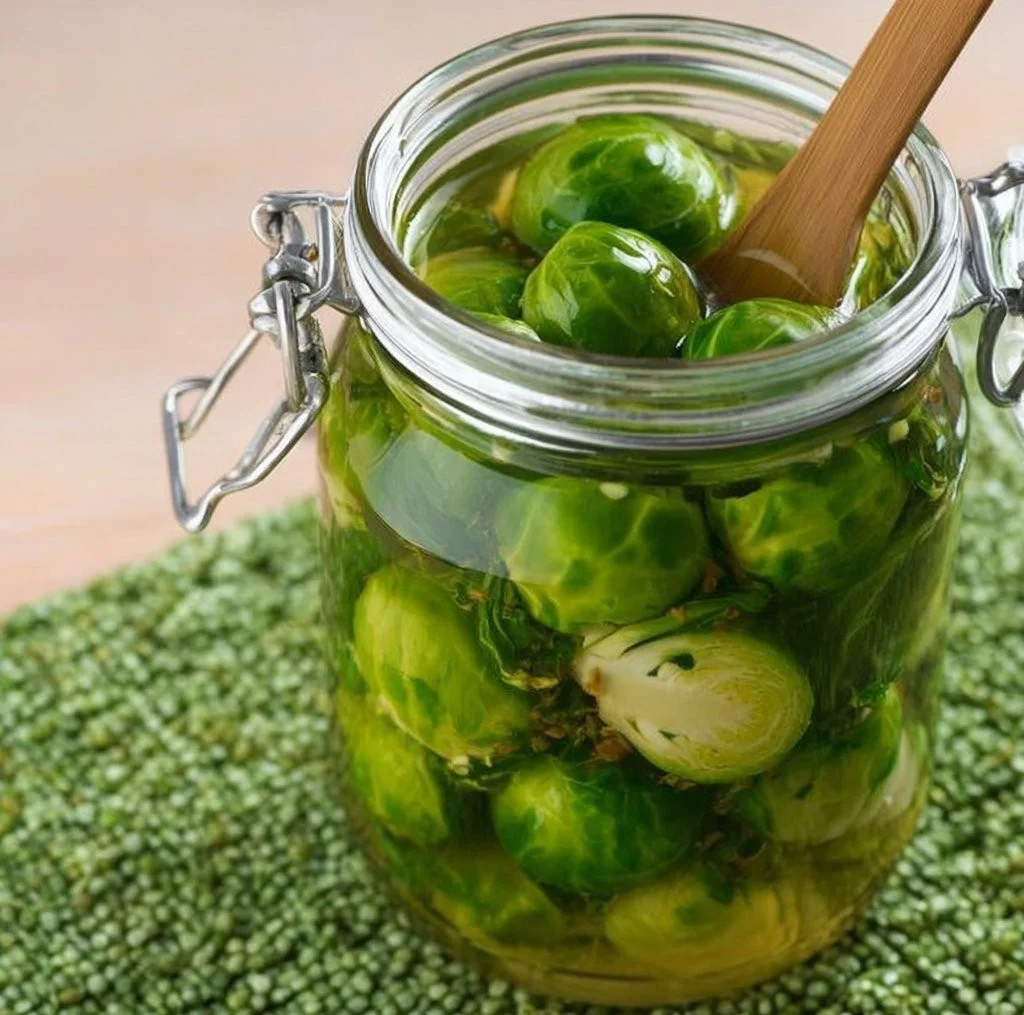
I’ve been making these pickled Brussels sprouts for years when I want a crunchy, tangy snack that lasts. They’re bright, a little spicy, and work as a salty nibble on a charcuterie board or as a crunchy topping for sandwiches—try them instead of a pickle on your favorite cheeseburger sliders. The recipe below uses simple pantry staples and a straightforward canning method so you can enjoy jars that keep on the shelf for months.
What makes this recipe special
This pickled Brussels sprouts recipe turns humble sprouts into a long-lasting, flavor-packed condiment. The combination of garlic and cayenne peppers gives each jar a spicy, aromatic bite, while the firm texture of halved sprouts holds up beautifully in brine. It’s perfect for:
- Meal prep: make a big batch and pull jars through holiday parties or busy weeks.
- Adding crunch: toss a few into salads, sandwiches, or grain bowls.
- Gifting: attractive jars make a thoughtful edible present for food-loving friends.
Why you’d reach for this recipe: it’s budget-friendly, stores well, and makes Brussels sprouts more exciting for kids and picky eaters.
How this recipe comes together
Quick overview so you know what to expect:
- Sterilize jars and keep lids warm in hot water.
- Trim and halve Brussels sprouts, then rinse in salted water to tighten them up.
- Simmer vinegar, water, and pickling salt to make a hot brine.
- Pack jars with sprouts, garlic, and peppers. Pour in hot brine, leaving 1/2" headspace.
- Process jars in a boiling water bath for 15 minutes and let them seal undisturbed for 24 hours.
This prep-forward approach means most hands-on time is trimming the sprouts; the rest is passive simmering and processing.
What you’ll need
- 2 pounds Brussels sprouts
- 5 cloves garlic (plan on 1 clove per jar)
- 5 hot cayenne peppers (dried or fresh — if fresh, slit them so heat infuses)
- 5 cups vinegar (use 5% acidity white or apple cider vinegar)
- 5 cups water
- 7 tablespoons pickling salt (see note)
- Spices (optional): mustard seeds, peppercorns, bay leaf, dill seed
Notes and substitutions:
- Vinegar: use only vinegar labeled 5% acidity for safe shelf-stable canning. Do not dilute with lower-acidity vinegars.
- Salt: pickling salt dissolves cleanly and keeps brine clear. If using kosher salt, weigh it or use a bit more by volume (kosher salts vary). Avoid iodized table salt for best clarity.
- Peppers: dried cayenne adds smoky heat; fresh jalapeños give a brighter, vegetal spice.
Directions to follow
- Place five canning jars in a large stockpot. Fill with water to cover jars and bring to a vigorous boil. Boil jars for 15 minutes to sterilize them. Keep jars in the hot water until ready to fill.
- Place canning jar seals (lids) in hot water as well. Do not boil the lids; keep them hot to soften the sealing compound.
- Trim the stem ends of the Brussels sprouts. Remove any yellow or ragged outer leaves. Slice each sprout in half lengthwise.
- Fill a bowl with cool water and 1–2 teaspoons salt. Let the halved sprouts sit for 15 minutes. This helps remove dirt and tightens the texture.
- In a separate large pot, combine 5 cups vinegar, 5 cups water, and 7 tablespoons pickling salt. Bring the mixture to a boil, then lower the heat and simmer for 10 minutes to fully dissolve the salt and marry flavors.
- Using tongs, remove one sterilized jar from the hot-water bath. Pack the jar tightly with halved Brussels sprouts.
- Add one garlic clove and one cayenne pepper to each jar. If using optional spices, add a pinch now (mustard seeds, peppercorns, etc.).
- Pour the hot brine over the packed sprouts, leaving 1/2 inch of headspace at the top of each jar.
- Wipe the rim of the jar with a moistened paper towel to remove any brine or vegetable bits.
- Place a hot seal on the jar and screw on the ring until finger-tight.
- Using a jar lifter, carefully lower the sealed jars back into the boiling water bath. Ensure water covers jars by at least 1 inch.
- Process jars in the boiling water for 15 minutes. Start your timer once the water returns to a full boil.
- Carefully remove the jars and set them on a towel on the counter. Do not disturb them for 24 hours.
- Listen for the “ping” of each jar as it seals. If a jar does not seal, either reprocess it with a fresh lid or refrigerate and use it within a few weeks.
01Ingredients
Main Ingredients
Optional Spices
02Method
- Sterilizing Jars
- Prepare Brussels Sprouts
- Make Brine
- Fill Jars
- Process Jars
- Cooling
Tap a step when it's done. The next one lights up.
0 OF 11 DONE03Recipe notes
- 01Use 5% vinegar for safe shelf-stable canning. To store, keep jars in a cool, dark pantry for up to 12 months.
How did it turn out?
No ratings yet. Tap a star to be the first.
Snap a photo and tag @recipe_smoke1 so I can see how yours came out.
Best ways to enjoy it
- Snack straight from the jar: the sprout’s texture makes a great cocktail-style snack.
- Add crunch to sandwiches, burgers, and wraps in place of dill pickles.
- Toss a few into grain bowls and warm salads for a tangy lift.
- Plate them on a cheese board with cured meats and mustard—pickled Brussels sprouts pair well with sharp cheeses.
- For warming comfort, chop and stir into hot soups like a creamy broccoli cheese soup for a contrast of textures.
How to store & freeze
Shelf-stable storage: When jars are properly sealed and processed with 5% vinegar, store them in a cool, dark pantry for up to 12 months. Best flavor is within 3–6 months.
Refrigeration: If a jar fails to seal or if you choose quick refrigerator pickles instead, store in the fridge and use within 4–6 weeks.
Freezing: Do not freeze jars of pickled sprouts in glass jars. You can freeze sprouts and brine in freezer-safe containers, but texture will soften on thawing. For long-term texture, canning is superior.
Safety note: Always check seals and look for signs of spoilage before eating (off-smell, cloudiness with sediment, or bulging lids). When in doubt, discard.
Creative twists
- Sweet-spicy: add 2 tablespoons sugar per 5 cups brine for a balance of heat and sweetness.
- Dill-forward: add a small sprig of fresh dill or 1/2 teaspoon dill seed per jar.
- Garlic-forward: double the garlic cloves for a punchier, more aromatic jar.
- Mustard-spice: add 1/2 teaspoon mustard seeds and a bay leaf to each jar for a deli-style flavor.
- Quick refrigerator pickles: halve the brine volume, bring to a boil, cool, then pour over jars and refrigerate for 24 hours before eating — use within 4–6 weeks.
Common questions
How long before I can eat them?
A: You can taste-test after 24–48 hours, but flavor improves after a week. For best depth, wait 2–3 weeks.
Are these shelf-stable right away?
A: Only if jars were processed in a boiling water bath and sealed correctly. If a jar didn’t seal, refrigerate and use sooner.
Can I use apple cider vinegar or a flavored vinegar?
A: Yes, apple cider vinegar at 5% acidity is fine and adds a fruitier note. Don’t use vinegars with less than 5% acidity for shelf-stable canning.
Can I substitute kosher or table salt for pickling salt?
A: You can substitute, but measure carefully. Kosher salt flakes are larger; weight-based substitution is safest. Avoid iodized table salt if you want clear brine.
How long do sealed jars keep?
A: Up to 12 months in a cool, dark place. Flavor peaks at 3–6 months.
Conclusion
If you want a crunchy, tangy jar you can reach for all winter, these pickled Brussels sprouts are a simple, satisfying project. For a variation with a playful name and slightly different spice profile, check out Pickled Brussels Sprouts (Frog Balls) | Kevin Is Cooking. For a different spin, try my Keto Brussels Sprouts With Salmon. Enjoy your jars—and remember to label them with the date.
 Appetizer
 Appetizer
 Appetizer
