Japanese Beef Bowl
A comforting and quick meal featuring thinly sliced beef simmered in a sweet soy sauce glaze served over fluffy rice, topped with a runny egg and green onions.

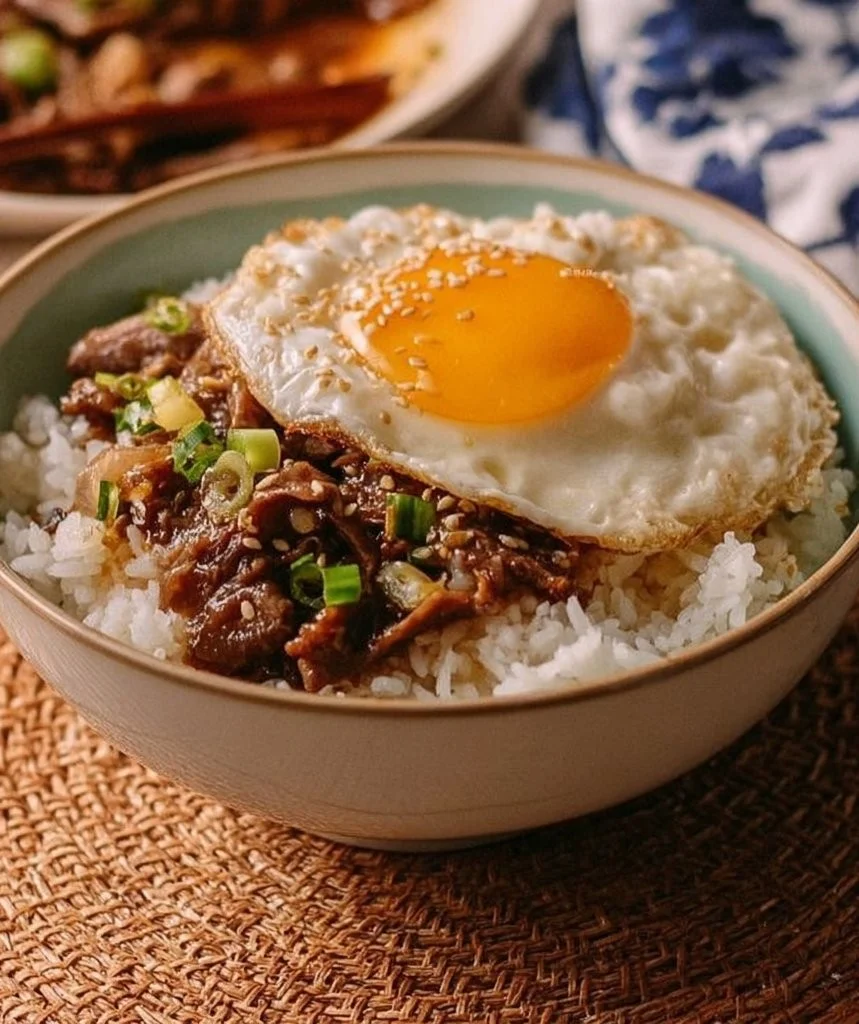
I make this simple Japanese beef bowl when I want something fast, deeply comforting, and just a little indulgent. A pile of fluffy rice topped with thinly sliced, fatty beef simmered in alcohol-free mirin and soy, finished with a runny egg and green onions—it’s homey, craveable, and exactly the sort of dish that takes a rushed weeknight dinner up a notch.
Why you’ll love this dish
This beef bowl is a small stack of wins: it’s fast to cook, budget-friendly, and intensely satisfying. Thinly sliced fatty beef cooks in minutes, and the alcohol-free mirin-soy sauce gives a sweet-salty glaze that clings to every bite of meat and rice. Make it for a solo comfort meal, a quick family dinner, or when you need a restaurant-style bowl at home without hours of prep.
What makes it especially handy is how flexible it is. Use pantry rice, add a quick salad, and you’ve got a balanced plate. It’s also an approachable introduction to Japanese home cooking—no exotic tools, just good technique.
Step-by-step overview
Before you start: plan on about 20–30 minutes total. The process is straightforward—
- Mix a simple alcohol-free mirin + soy sauce marinade.
- Quickly sear the thin beef in a hot skillet until just browned.
- Add the sauce and reduce briefly so it becomes glossy and flavorful.
- Cook rice while the beef simmers.
- Top rice with the beef, add a fried or poached egg, and sprinkle green onions.
This overview helps you pace the steps: rice first (or use leftover rice), then meat, then egg last so it’s hot and runny on top.
What you’ll need
- Thinly sliced fatty beef (ribeye, chuck slice, or sukiyaki-cut).
- Alcohol-free mirin (sweet Japanese rice vinegar).
- Soy sauce (regular or low-sodium to taste).
- Rice (short-grain Japanese rice is ideal; jasmine or medium-grain will work).
- Eggs (one per bowl; fry or poach).
- Green onions, chopped (optional, for brightness).
Notes/substitutions: If you don’t have alcohol-free mirin, use 1 tsp sugar plus a splash of dashi or extra alcohol-free mirin substitute; a little dashi or a pinch of sugar deepens flavor. For leaner beef, add a touch of oil to the pan or a small knob of butter for richness.
Step-by-step instructions
- Combine the alcohol-free mirin and soy sauce in a small bowl and set aside. (If you like, add 1 tsp sugar or 1/4 cup dashi for a more traditional gyudon flavor.)
- Heat a skillet over medium-high. Add a thin film of oil if your beef is very lean.
- Add the thinly sliced beef in a single layer and cook, stirring, until the slices just lose their pink—about 1–3 minutes.
- Pour the alcohol-free mirin-soy mixture into the skillet. Lower the heat to medium and simmer until the sauce reduces slightly and coats the meat, 2–4 minutes.
- Meanwhile, cook rice according to package instructions or in a rice cooker so it’s hot and fluffy when ready.
- Fry or poach eggs to your preferred doneness. A runny yolk mixes into the beef and rice for a silky finish.
- Serve a scoop of rice in a bowl, top with the sauced beef, place the egg on top, and finish with chopped green onions if you like. Enjoy immediately.
01Ingredients
For the beef
For serving
02Method
- Preparation
- Cooking
- Serving
Tap a step when it's done. The next one lights up.
0 OF 7 DONE03Recipe notes
- 01If you don’t have alcohol-free mirin, substitute with 1 tsp sugar and a splash of dashi. Store beef and rice separately in airtight containers for 3-4 days. Freeze beef mixture for up to 2 months.
How did it turn out?
No ratings yet. Tap a star to be the first.
Snap a photo and tag @recipe_smoke1 so I can see how yours came out.
Best ways to enjoy it
- Plate: Serve in a deep bowl so the sauce pools into the rice—this is part of the pleasure.
- Sides: Quick cucumber salad, miso soup, or lightly pickled daikon are classic complements. A small dish of kimchi or steamed greens also brightens the meal.
- Drinks: Green tea or a crisp citrus soda pairs nicely; for a cozy evening, a warm barley tea works well.
Storage and reheating tips
Refrigerator: Store beef and rice separately in airtight containers for up to 3–4 days. Eggs are best prepared fresh.
Freezer: Freeze the beef mixture (without rice) in a freezer-safe container for up to 2 months. Thaw overnight in the fridge before reheating.
Reheating: Reheat beef gently on the stovetop over low heat with a splash of water or alcohol-free mirin to loosen the sauce, or microwave covered until steaming, stirring halfway. Always reheat to 165°F (74°C) for safety.
Safety note: If you prefer runny yolks but serve to young children, elderly, pregnant people, or immunocompromised guests, use pasteurized eggs or cook yolks until firm.
Creative twists
- Onion-forward gyudon: Slice a sweet onion thin and cook it with the beef for extra sweetness and texture.
- Dashi boost: Swap part of the alcohol-free mirin with dashi for a more umami-rich, restaurant-style gyudon.
- Vegetarian swap: Replace beef with sautéed king oyster mushrooms or firm tofu, use alcohol-free mirin-soy + a dash of mushroom stock.
- Spicy version: Add a spoonful of chili oil, gochujang, or shichimi togarashi for heat.
- Toppings: Pickled ginger (beni shoga), toasted sesame seeds, nori strips, or furikake add color and complexity.
Your questions answered
How long does this take to make from start to finish?
A: About 20–30 minutes if you cook rice while you brown the beef. Using leftover rice shortens active time dramatically.
Can I use frozen thin-sliced beef?
A: Yes—partially thaw it enough to separate slices, then cook as directed. Fully thawed thin slices will separate and cook more evenly.
Is alcohol-free mirin essential?
A: Alcohol-free mirin adds a subtle sweetness and gloss. If you don’t have it, use a teaspoon of sugar plus a splash of dashi or water; the result will still be delicious but slightly different.
Is this the same as gyudon?
A: Yes—this beef-and-rice bowl follows the same basic concept as gyudon, though regional recipes vary with dashi, sugar, and onion levels.
Can I make this ahead for meal prep?
A: Prepare the beef sauce and rice separately and assemble within 3–4 days. Reheat beef and rice before topping with a freshly cooked egg for best texture.
Conclusion
For more Japanese rice bowls, try my Japanese Katsu Bowls with Katsu Sauce or Japanese Curry on Rice. For a quick visual guide and classic Japanese video demonstration, watch this gyudon video at Gyudon (Japanese Beef Rice Bowl) video on Just One Cookbook.
 Dinner Bowls
 Dinner Bowls
 Dinner Bowls
