Quick Fridge Pickled Vegetables
These quick fridge pickled vegetables are a versatile and easy way to brighten up any meal, created with simple pantry staples in just a few minutes.

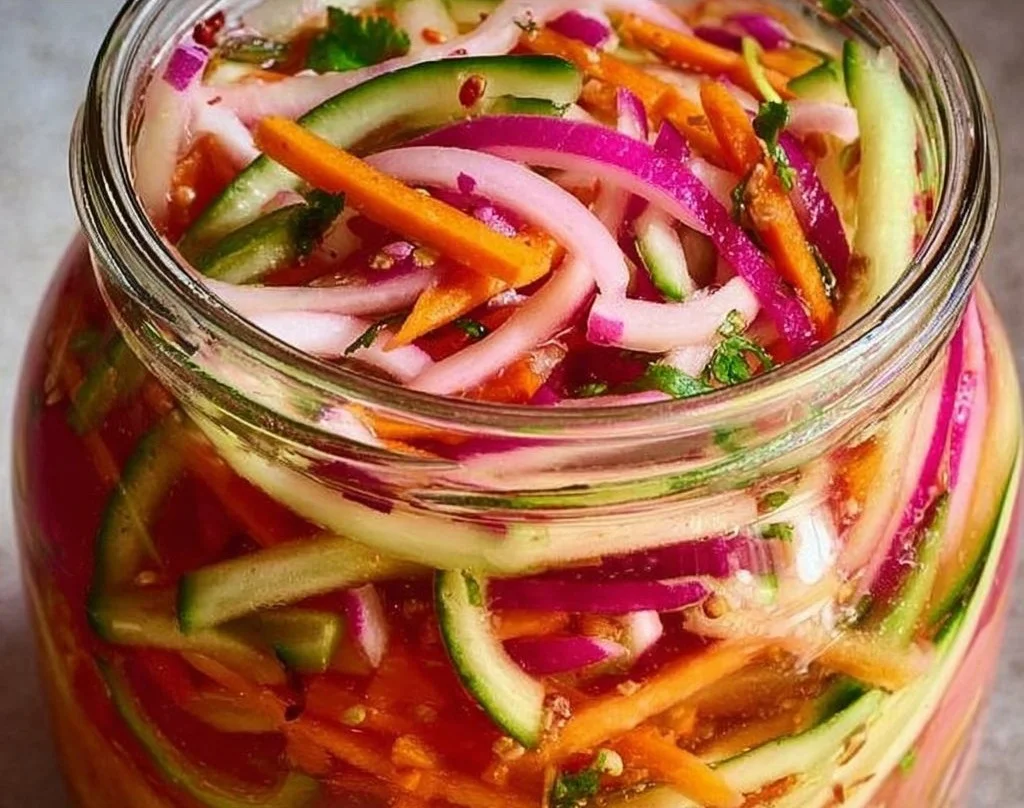
I keep a jar of these quick fridge pickled vegetables in my refrigerator most weeks — they brighten everything from tacos to weekday salads and take less than 20 minutes active time. This recipe is the kind of small kitchen win that turns leftover veg into something crunchy, tangy, and endlessly useful. If you like fast condiments that punch above their weight, you’ll appreciate how little effort creates big flavor; for a warm vegetable side, pair them alongside a roasted tray like my one-pan Greek vegetables for contrast.
Why you’ll love this dish
Quick fridge pickles are the kind of recipe that solves more than one problem: they rescue extra produce, add acid and texture to bland dishes, and come together in minutes. Unlike canned pickles, these require no special equipment and develop bright flavor after just a few hours in the fridge, so they’re perfect for last-minute meal upgrades, lunchboxes, or a crunchy topping on grain bowls.
Reasons to try it:
- Fast: hot brine in minutes; ready same day.
- Budget-friendly: uses simple pantry staples and small amounts of veg.
- Versatile: great for sandwiches, tacos, salads, or a snack.
- Kid-friendly: mild, slightly sweet brine (sugar optional) appeals to many tastes.
- No canning: fridge method only — simple, safe, and reversible.
How this recipe comes together
Step-by-step overview: You’ll make a quick hot brine from vinegar, water, aromatics, and seasonings. While the brine heats, prepare your vegetables into matchsticks or thin slices so they pickle evenly. Pour the hot liquid over the veg in a clean jar, cool to room temperature, then refrigerate. Flavor develops over a few hours and improves the next day.
What you’ll need
- 1 cup vinegar (white or apple cider vinegar both work; apple cider gives a sweeter note)
- 1/2 cup water
- 1 clove garlic, minced (or 1/2 tsp garlic powder)
- 1/2 tsp sea salt
- 1/2 tsp sugar (optional — balances acidity)
- 1/4 tsp dried oregano (or 1 tsp fresh chopped)
- 1/2 cup shredded carrots
- 1/2 cup shredded radish
- 1/3 English cucumber, cut into matchsticks (use Persian or regular cucumber if needed; peel if waxed)
- 1/2 red onion, thinly sliced
- 1 TBSP chopped green onion (scallion)
Ingredient notes and substitutions:
- Vinegar: use a 5% acidity vinegar for best results. Rice vinegar is milder; white vinegar is brighter.
- Sugar: omit for whole30/low-sugar diets; add a bit of honey as an alternative for flavor depth.
- Herbs/spices: swap oregano for dill or thyme depending on your flavor goal.
Step-by-step instructions
- Wash and dry a medium–large mason jar thoroughly. Sterilize with hot water if you want extra precaution.
- Prepare the vegetables: shred the carrots and radish, slice the red onion thin, and cut the cucumber into matchsticks. Chop the green onion and mince the garlic.
- In a medium saucepan, combine 1 cup vinegar and 1/2 cup water. Bring to a gentle boil over medium heat.
- Remove the pan from heat. Stir in the minced garlic, chopped green onion, 1/2 tsp sea salt, 1/4 tsp dried oregano, and 1/2 tsp sugar (if using) until dissolved. Let the brine cool 5–10 minutes so it’s hot but not scalding.
- Pack the prepared vegetables into the jar, pressing down gently to make room but not crushing them.
- Pour the hot brine over the vegetables, leaving about 1/2 inch headspace. Press the veggies down so they’re submerged.
- Let the jar cool to room temperature uncovered (about 20–30 minutes). Seal with the lid and refrigerate. The pickles are ready in 1–2 hours, best after 24 hours.
01Ingredients
Brine
Vegetables
02Method
- Preparation
- Cooking
- Packing
Tap a step when it's done. The next one lights up.
0 OF 8 DONE03Recipe notes
- 01Properly stored pickles keep for 2–3 weeks; flavor peaks in the first week. Use clean utensils to remove pickles to avoid contamination.
How did it turn out?
No ratings yet. Tap a star to be the first.
Snap a photo and tag @recipe_smoke1 so I can see how yours came out.
Best ways to enjoy it
Serving suggestions:
- Use as a crunchy topping for tacos, banh mi, or pulled meats.
- Toss a few spoonfuls into grain bowls or salads for acidity and texture.
- Add to sandwiches, wraps, or burgers for a bright contrast.
- Serve as part of a snack board with cheese and olives.
For a warm-or-cold combo, add a spoonful to roasted or sautéed vegetables for a fresh contrast; a favorite pairing is alongside healthy sautéed vegetables where the pickles cut through the richness.
Storage and reheating tips
Refrigerate in a sealed jar. Properly stored, these fridge pickles keep 2–3 weeks; flavor peaks in the first week.
Do not freeze: the texture will turn mushy.
No reheating needed — serve cold or at room temperature. If you prefer warmed pickles, add them just before serving to prevent sogginess.
Use clean utensils to remove pickles to avoid contamination and extend shelf life.
Flavor swaps
Creative twists:
- Spicy: add 1 sliced jalapeño or 1/4 tsp red pepper flakes to the brine.
- Asian-style: swap oregano for 1 tsp grated ginger and use rice vinegar; add a splash of soy sauce.
- Dill-forward: replace oregano with 1 tsp dried dill or a few sprigs of fresh dill.
- Sweet-sour: increase sugar to 1–2 tsp and add a cinnamon stick for a breakfast-friendly version.
- Root veg mix: swap radish for thinly sliced daikon or use thinly sliced fennel for an anise note.
Common questions
How long until these are ready to eat?
A: They’re edible after 1–2 hours but taste best after 24 hours when flavors meld.
Can I can these for shelf stability?
A: No — this is a refrigerator pickle recipe. It’s not processed for shelf-stable canning. If you want shelf-stable pickles, follow a tested water-bath canning recipe with adjusted acidity and processing times.
Is the sugar necessary?
A: No. Sugar is optional and balances the vinegar. Omit it for whole30 or low-sugar needs; add a little honey or maple for natural sweetness.
Can I substitute other vegetables?
A: Yes. Thinly slice bell peppers, fennel, daikon, green beans, or cauliflower florets. Denser veg may need slightly longer pickling time to soften.
How should I reuse the brine?
A: You can reuse the leftover brine once for a second quick pickle batch if it’s been refrigerated and hasn’t been cross-contaminated, but flavor and acidity may be weaker. Fresh brine is recommended for best safety and flavor.
Conclusion
This quick fridge pickled vegetables recipe is a fast, flexible way to add crunch and brightness to everyday meals. For another quick-pickle technique with slightly different vegetable combinations, see Quick Pickled Vegetables – My Quiet Kitchen. For a different spin, try my The Ultimate Guide to Quick Pickled Vegetables.
 Side Dish
 Side Dish
 Side Dish
