Valentine’s Day Buttermilk Cake with Sprinkles
This tender, rosy cake is perfect for Valentine's Day gatherings, delivering classic flavor with minimal fuss. Easy to make, everyone will adore its vanilla flavor and customizable options.

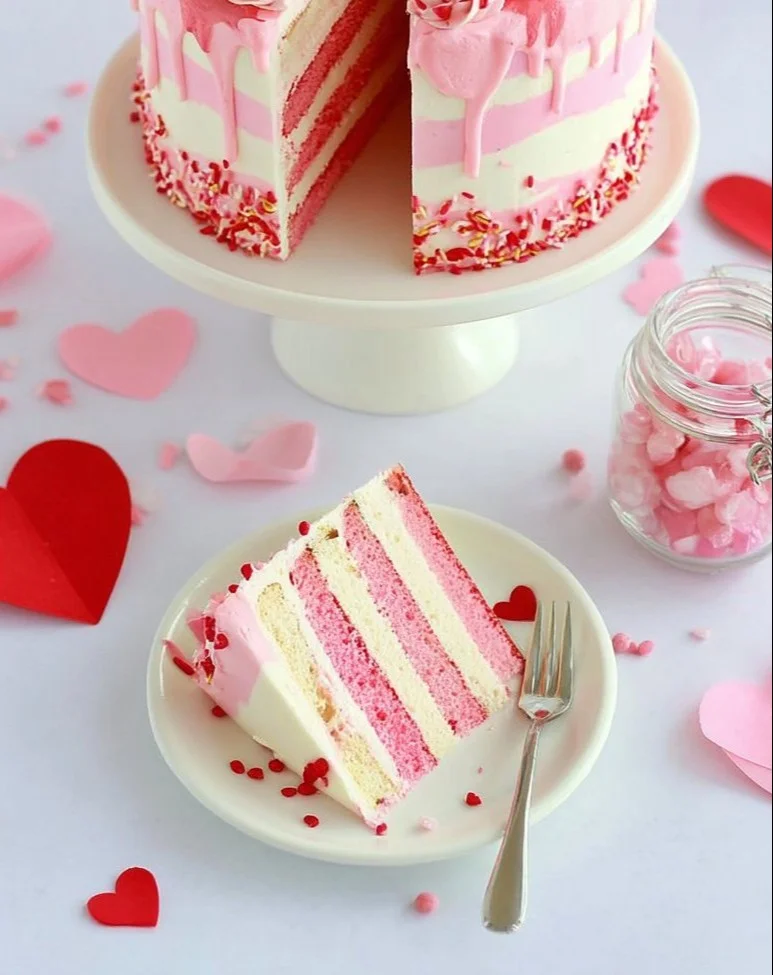
I still remember the first time I made this simple, rosy cake for a small Valentine’s gathering — it sliced clean, tasted like a tender vanilla cloud, and beatbox-heart sprinkles made everyone grin. It’s the kind of dessert you can pull together on short notice and still make feel special. If you’re thinking of pairing it with small individual treats, you might also enjoy my take on Valentine’s Day cupcakes for a matching set of sweets.
Why you’ll love this dish
This Valentine’s Day Cake delivers classic flavor without fuss. It’s:
- Quick enough for a last-minute celebration (one bowl for wet ingredients, one for dry).
- Family-friendly in flavor — a tender vanilla crumb that kids adore.
- Easily customized: add color, swap almond extract, or layer with jam for a different profile.
- Budget-friendly: pantry staples are the main players — flour, sugar, butter, eggs, and buttermilk.
When to make it: a cozy Valentine’s dinner, classroom party, or any time you want a festive yet unfussy cake.
The cooking process explained
Before you start, here’s a quick roadmap so the whole bake feels predictable: cream butter and sugar, add eggs, fold in buttermilk and vanilla, then combine with the dry mix. Tint, split into two 9-inch pans, and bake about 25–30 minutes. Cool, stack with buttercream, and decorate.
If you like a slightly more structured crumb or want to experiment with technique, compare notes with my go-to vanilla approach here: a go-to vanilla cake recipe — many of the same principles apply.
What you’ll need
- 2 cups all-purpose flour (measure by spooning into the cup and leveling; for lighter cake, sift once)
- 1 ¾ cups granulated sugar
- ½ cup unsalted butter, softened (room temperature; not melted)
- 1 cup buttermilk (or 1 cup milk + 1 tbsp lemon juice, let sit 5 minutes)
- 3 large eggs (room temperature helps emulsion)
- 1 tablespoon vanilla extract (or 2 tsp vanilla + 1/2 tsp almond extract)
- 1 teaspoon baking powder
- ½ teaspoon baking soda
- ½ teaspoon salt
- Pink food coloring (optional — gel color gives a brighter hue without thinning batter)
- Buttercream frosting (store-bought or homemade)
- Sprinkles (optional)
Substitutions/notes: For a dairy-free cake, use a plant-based butter and swap buttermilk with unsweetened almond milk plus 1 tbsp vinegar. For a lighter crumb, replace ¼ cup flour with cake flour.
Step-by-step instructions
- Preheat the oven to 350°F (175°C). Grease and flour two 9-inch round cake pans, or line the bottoms with parchment rounds.
- In a large bowl, beat the softened butter and sugar together until pale and fluffy, about 3–4 minutes with an electric mixer.
- Add the eggs one at a time, beating well after each addition so the mixture stays smooth.
- Mix in the buttermilk and vanilla until combined.
- In a separate bowl, whisk together the flour, baking powder, baking soda, and salt.
- Gradually add the dry ingredients to the wet mixture in two additions. Mix just until combined — stop as soon as there are no streaks of flour.
- If you want pink cake, add a few drops of gel food coloring and fold gently to achieve your desired shade.
- Divide the batter evenly between the prepared pans and smooth the tops.
- Bake 25–30 minutes, rotating the pans halfway through if your oven runs hot, until a toothpick inserted in the center comes out clean or with a few moist crumbs.
- Let the cakes cool in the pans 10 minutes, then turn out onto wire racks to cool completely.
- Level the tops if needed, spread a layer of buttercream between the cakes, stack, and frost the outside. Decorate with sprinkles if desired.
01Ingredients
Dry Ingredients
Wet Ingredients
Toppings
02Method
- Preparation
- Baking
- Assembly
Tap a step when it's done. The next one lights up.
0 OF 11 DONE03Recipe notes
- 01Best served with whipped cream and fresh raspberries. Can be made a day ahead. Store at room temperature for up to 2 days, in the refrigerator for up to 5 days, or freeze for up to 3 months. Room-temperature ingredients combine more easily for a smoother batter.
How did it turn out?
No ratings yet. Tap a star to be the first.
Snap a photo and tag @recipe_smoke1 so I can see how yours came out.
Best ways to enjoy it
- Slice on a pretty plate with a dollop of whipped cream and fresh raspberries for color contrast.
- Serve with a light sparkling white grape juice or a cup of bright coffee to cut the sweetness.
- Make single-serve plates: cut cake into slices and top each with a macerated strawberry for a café-style presentation.
- For an intimate dessert, warm a slice briefly (10–12 seconds) in the microwave and add a scoop of vanilla ice cream.
How to store & freeze
At room temperature: Keep the frosted cake in a cake dome or covered with plastic wrap for up to 2 days.
In the refrigerator: Store covered for up to 5 days. Bring slices to room temperature before serving for the best texture.
To freeze: Wrap cooled, unfrosted layers tightly in plastic, then foil. Freeze up to 3 months. Thaw in the fridge overnight, then bring to room temperature before frosting.
Food safety: once frosted with perishable buttercream, keep refrigerated if not serving within a few hours in warm conditions.
Creative twists
- Lemon-vanilla: add 1 tablespoon lemon zest to the batter and swap half the vanilla for lemon extract.
- Almond variation: swap 1 teaspoon of vanilla for 1 teaspoon almond extract and add toasted almond slivers between layers.
- Chocolate surprise: swirl in ¼ cup melted and cooled dark chocolate to create a marbled interior.
- Gluten-free: replace with a 1:1 gluten-free flour blend and add 1 teaspoon xanthan gum if your blend doesn’t include it.
- Mini cakes: bake in a 9×13 pan for a sheet cake; bake 20–25 minutes.
Helpful answers
How long does this cake take from start to finish?
A: Plan about 20 minutes prep, 25–30 minutes bake time, and 30–60 minutes cooling before frosting — roughly 1.5 to 2 hours total.
Can I make the cake a day ahead?
A: Yes. Bake and cool the layers, wrap them tightly, and store in the fridge. Frost the next day for fresher frosting and easier decorating.
Is buttermilk necessary?
A: Buttermilk gives tenderness and slight tang. You can substitute milk + 1 tbsp lemon juice or vinegar per cup if you don’t have buttermilk.
FAQ
Common questions
Q: Can I use a hand mixer instead of a stand mixer?
A: Absolutely. A hand mixer works fine — just make sure to beat the butter and sugar until light, and don’t overwork the batter once flour is added.
My cake sank slightly in the center. Why?
A: Common causes: underbaked center, oven door opened too early, or overbeating the batter which incorporated too much air. Check doneness with a toothpick and keep oven stable.
How do I get an even pink color without too much dye?
A: Use gel food coloring and add a small amount at a time. Gel gives more intense color with less liquid. Natural alternatives (beet powder) can color but may add flavor.
Conclusion
If you want inspiration for a fancier, layered Valentine’s cake with extra technique tips, see this detailed Valentine’s Day Cake from Handle the Heat. For another idea, try my Valentine’s Day Cake.
 Cakes
Cakes Cakes
Cakes Cakes
Cakes
