Yaki Udon Noodle Recipe
A quick and satisfying yaki udon recipe featuring chewy Sanuki udon noodles, king prawns, and a glossy sauce. Perfect for a midweek dinner, ready in under 20 minutes.

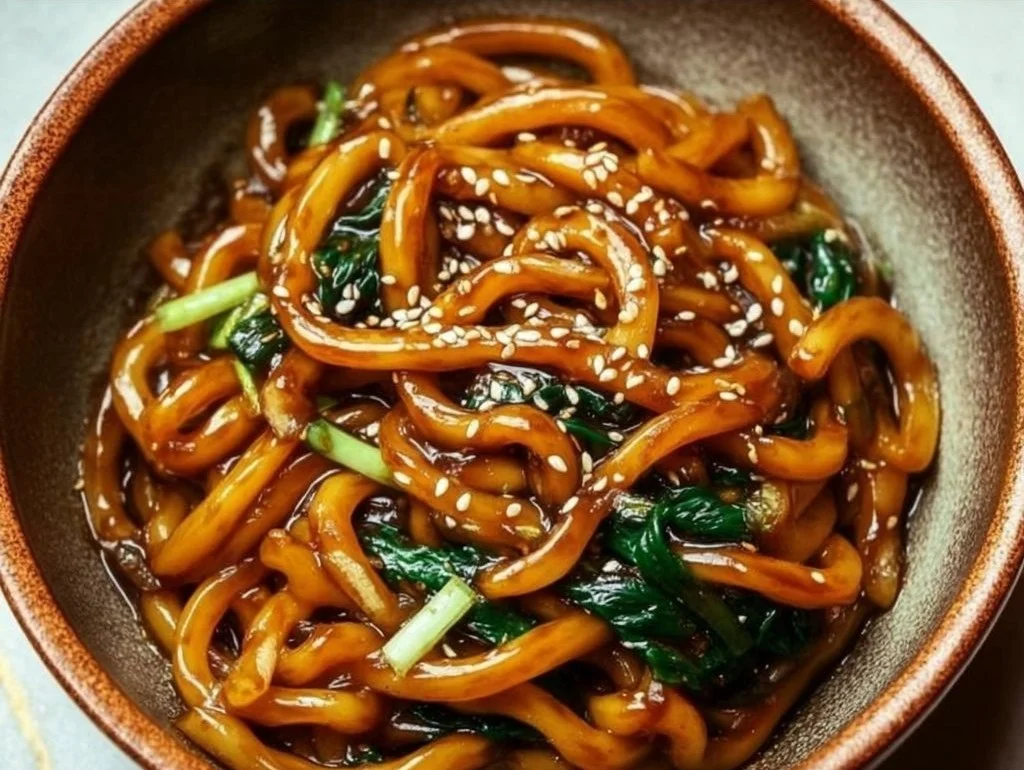
I’ve been making this yaki udon recipe for years whenever I want a quick, satisfying weeknight meal that still feels a bit special. It cooks in under 20 minutes, uses minimal equipment, and the glossy sauce clings to thick Sanuki udon for that chewy bite I love. If you enjoy other noodle dinners, you might also like my take on a hearty Persian noodle soup for a contrasting, cozy bowl.
Why you’ll love this dish
Yaki udon is simple, flexible, and deeply comforting. It’s the kind of meal you can pull together with a few fresh vegetables and a couple of pantry sauces. The chewy udon noodles hold the sauce well, shelling out big mouthfuls of flavour with every bite. This version uses king prawns and shiitake for a meaty texture without heaviness, and bok choy keeps it bright and fast.
Reasons to try it:
- Ready in about 20 minutes from fridge to plate.
- Uses mostly store-cupboard sauces (soy, alcohol-free mirin, oyster).
- Easy to adapt for vegans or meat lovers.
- Great for feeding a family or meal-prepping for lunches.
How this recipe comes together
Step-by-step overview:
- Cook and cool the frozen Sanuki udon briefly so they don’t overcook later.
- Whisk a simple sauce from soy, alcohol-free mirin, oyster sauce and a touch of sugar.
- Stir-fry aromatics, then sear prawns until just pink and remove.
- Quickly fry carrot and shiitake until tender, then wilt bok choy.
- Return prawns and noodles to the wok, pour over the sauce and toss gently until glossy.
- Finish with spring onions, sesame and optional katsuobushi.
This roadmap helps you prep efficiently and keeps the prawns and noodles from turning rubbery.
Key Ingredients
What you’ll need (serves 4):
- 4 portions (approx. 800 g) frozen Sanuki udon noodles (cook per pack) — frozen udon gives the best chew.
- 1 tbsp vegetable or rapeseed oil (neutral oil for high-heat stir-frying).
- 2 cloves garlic, finely minced.
- 2 cm fresh ginger, grated.
- 1 medium onion, thinly sliced.
- 1 large carrot, julienned or thinly sliced.
- 150 g shiitake mushrooms, sliced (cremini are a fine swap).
- 400 g raw king prawns, peeled and deveined (substitute chicken or firm tofu for vegetarians).
- 1 head bok choy, leaves separated and washed.
- 4 tbsp soy sauce (use light soy for a cleaner taste).
- 2 tbsp alcohol-free mirin (or 2 tbsp dry chicken broth + 1 tsp sugar).
- 2 tbsp oyster sauce (use vegetarian mushroom oyster for meat-free).
- 1 tsp granulated sugar.
- 2 spring onions, finely sliced.
- 1 tsp toasted sesame seeds.
- Optional: katsuobushi (bonito flakes) for sprinkling.
Note: If you want a gluten-free version, swap the soy and oyster sauces for gluten-free tamari and a GF oyster alternative.
Step-by-step instructions
Prepare the noodles and sauce:
- Bring a large pan of water to a boil. Add the frozen udon and cook 1–2 minutes until they separate and are heated through. Drain in a colander and rinse with cold water to stop cooking. Set aside.
- In a small bowl, whisk 4 tbsp soy sauce, 2 tbsp alcohol-free mirin, 2 tbsp oyster sauce and 1 tsp sugar. Set aside.
Sauté the aromatics:
3. Heat 1 tbsp oil in a large frying pan or wok over medium-high heat until shimmering.
4. Add the sliced onion and stir-fry 2–3 minutes until it begins to soften. Add minced garlic and grated ginger. Stir 1 minute until fragrant.
Cook the prawns:
5. Add the prawns to the pan. Stir frequently for 2–3 minutes until they turn pink and are just cooked through. Remove to a plate immediately to avoid overcooking.
Stir-fry the vegetables:
6. In the same pan, add carrot and shiitake. Stir-fry 4–5 minutes until carrots are crisp-tender and mushrooms have coloured.
7. Add bok choy leaves and stir 1–2 minutes until wilted but still a little crunchy.
Combine everything:
8. Return prawns to the pan. Add drained udon noodles. Pour the prepared sauce evenly over the ingredients.
Toss and serve:
9. Using tongs, lift and turn the noodles from the bottom to toss everything gently for 1–2 minutes until the sauce is glossy and everything is heated through. Avoid aggressive stirring to keep noodle integrity.
10. Divide among four bowls. Garnish with sliced spring onions, toasted sesame seeds and a sprinkle of katsuobushi if using. Serve immediately.
For an alternative noodle flavour profile, try a companion recipe like this sticky garlic chicken noodles to see how different sauces change the dish.
01Ingredients
Noodles and Sauce
Main Ingredients
02Method
- Preparation and Sauce
- Sauté Aromatics
- Cook Prawns
- Stir-fry Vegetables
- Combine Everything
- Toss and Serve
Tap a step when it's done. The next one lights up.
0 OF 10 DONE03Recipe notes
- 01For a gluten-free version, swap the soy and oyster sauces for gluten-free tamari and a GF oyster alternative. Cool leftovers quickly and store in an airtight container in the fridge for up to 3 days. Seafood dishes are best eaten within 48–72 hours.
How did it turn out?
No ratings yet. Tap a star to be the first.
Snap a photo and tag @recipe_smoke1 so I can see how yours came out.
How to plate and pair
Best ways to enjoy it:
- Pile noodles into wide, shallow bowls so the toppings sit visibly on top.
- Add a wedge of lime on the side for a citrus lift.
- Pair with a simple sesame-cucumber salad or quick pickled ginger to cut through the richness.
- For drinks, a light citrus soda, a dry pear spritzer or green tea complements the salty-savoury notes.
Garnish ideas:
- Crispy shallots or toasted nori strips for texture.
- A drizzle of chilli oil or shichimi togarashi for heat.
Storage and reheating tips
Keeping leftovers fresh:
Cool leftovers quickly and store in an airtight container in the fridge for up to 3 days. Seafood-based dishes are best eaten within 48–72 hours.
To reheat, use a hot pan or wok with a splash of oil and a tablespoon of water. Stir-fry briefly until steaming. Microwave on high in short bursts (stirring between) to avoid rubbery prawns.
Freezing: You can freeze the noodles without garnishes for up to 1 month. Defrost overnight in the fridge and refresh in a hot pan. Note: texture of bok choy and prawns may suffer after freezing — consider omitting bok choy and adding fresh on reheating.
Food safety note:
Refrigerate within two hours of cooking. Cook prawns until opaque and firm — overcooking makes them tough, undercooking is unsafe.
Creative twists
Recipe variations:
- Vegetarian: Replace prawns with thick tofu slices or tempeh and swap oyster sauce for mushroom oyster or hoisin.
- Beef yaki udon: Swap prawns for thinly sliced sirloin cooked quickly on high heat; add a splash of dashi.
- Spicy: Add 1 tsp sambal oelek or a tablespoon of gochujang to the sauce.
- Korean twist: Stir in kimchi and finish with sesame oil and a fried egg on top.
- Citrus lift: Finish with a teaspoon of yuzu kosho for bright citrus-pepper notes.
Your questions answered
Can I use dried udon instead of frozen?
A: Yes. Dried udon needs longer boiling per the packet. Rinse under cold water to stop cooking and proceed the same way.
How do I stop noodles from getting mushy?
A: Don’t over-boil them. Cook until just separated and cooled immediately. Use high heat for the final toss and avoid long simmering in the sauce.
Can I prep parts ahead?
A: Absolutely. Slice veg and make the sauce the day before. Cook prawns only at serving time or they’ll overcook when reheated.
Is there a good vegetarian oyster sauce?
A: Yes — look for mushroom-based vegetarian oyster sauce in Asian grocery stores or use hoisin plus a splash of soy.
Conclusion
If you want a fast, flexible weeknight classic that still feels restaurant-worthy, this yaki udon recipe delivers. The balance of chewy noodles, juicy prawns and glossy savoury sauce is hard to beat. For more ideas, check out Yaki Udon | Stir Fried Udon Noodles – Drive Me Hungry and my Miso Udon Noodle Soup.
 Crockpot & Slow Cooker
 Crockpot & Slow Cooker
 Dinner Bowls
