Melon Bread with Buttery Crust
Melon Bread is a beloved Japanese bakery favorite, featuring a pillowy sweet bread underneath a crisp, cookie-like crust. Perfect for sharing, this delightful treat is great for weekend baking or afternoon snacks.

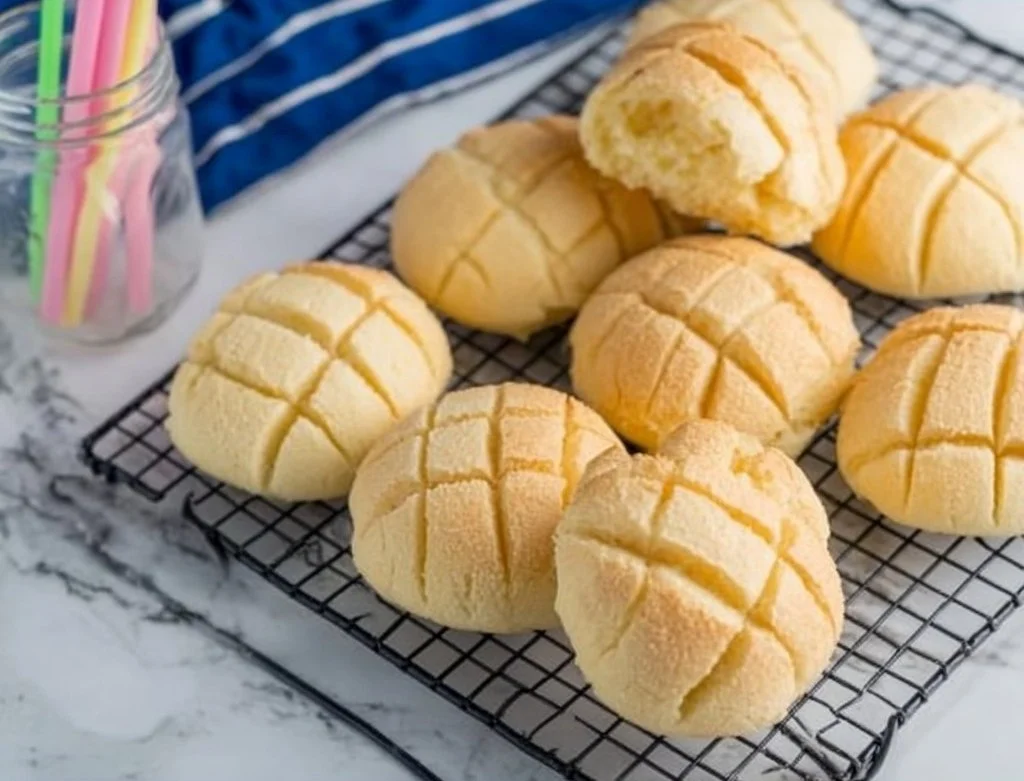
My first time making melon bread, the contrast between a pillowy sweet roll and a crisp, crackly cookie top felt like a small kitchen miracle. It’s a beloved Japanese bakery favorite (melonpan) that’s perfect for weekend baking, lunchboxes, or an afternoon treat. If you like soft, hand-shaped breads with a bit of showy texture, you might also enjoy the technique used in my banana bread pancake mix loaf: banana bread pancake mix loaf.
Why you’ll love this dish
Melon bread is one of those recipes that looks fancier than it is. You get a soft, enriched milk bread underneath a sweet biscuit crust that cracks into a geometric pattern during baking. It’s comforting and fun to shape, kid-friendly, and great for gifting because each bun is individually portioned.
What makes this recipe special:
- Texture contrast: tender brioche-like crumb vs. crisp cookie top.
- Hands-on shaping — satisfying and customizable.
- Makes about 8 individual buns (depending on sizing), ideal for sharing.
Preparing Melon Bread
Before you dive in, here’s the workflow so you know what to expect: make the enriched bread dough, make the biscuit (cookie) dough, shape and cover each roll with a thin disk of biscuit dough, score the pattern, proof briefly, then bake. Steps are short and repeatable — perfect for bakers who like rhythm and small batches.
What you’ll need
- For the bread dough:
- 225 g bread flour
- 25 g cake flour
- 1 tsp Diamond Crystal kosher salt (if using Morton kosher salt, use about 3/4 tsp)
- 3 Tbsp granulated sugar
- 1¼ tsp instant yeast (if using active dry yeast, see Notes below)
- 1 large egg (about 50 g, beaten)
- 50 ml whole milk (86ºF/30ºC)
- 50 ml water (86ºF/30ºC)
- 35 g unsalted butter (2½ Tbsp; cubed; room temperature)
- For the biscuit (cookie) topping:
- 60 g unsalted butter (soft)
- 100 g granulated sugar (½ cup)
- 1 large egg (about 50 g, beaten)
- 200 g cake flour
- ½ tsp baking powder
- 2 Tbsp granulated sugar (for rolling)
Notes and substitutions:
- You can swap whole milk for non-dairy milk for a dairy-free version (butter swap to vegan butter). Texture will change slightly.
- If you don’t have cake flour, use all-purpose minus 2 Tbsp per 1 cup (a quick substitute). Cake flour keeps the cookie top tender.
- For active dry yeast: increase to 1½ tsp and dissolve in the warm milk/water before mixing.
Directions to follow
Before You Start: I highly encourage you to weigh your ingredients using a kitchen scale. For weights, toggle Metric in your recipe card if available. If you don’t have a scale: fluff flour with a spoon, spoon into the cup, and level — don’t scoop directly.
Gather everything and preheat your oven to 350°F (175°C) before baking.
- Make the bread dough
- Combine bread flour, cake flour, salt, and sugar in a mixing bowl.
- Add instant yeast to the dry mix. If using active dry yeast, dissolve 1½ tsp in the warm milk/water first.
- Mix in beaten egg, warm milk, and warm water until a rough dough forms.
- Knead (by hand for about 10–12 minutes or stand mixer 6–8 minutes using dough hook) until smooth and slightly tacky.
- Add the 35 g cubed butter and continue kneading until fully incorporated and the dough is elastic and windowpane develops.
- Place dough in a lightly oiled bowl, cover, and let rise until doubled (about 60–90 minutes at room temperature).
- Make the biscuit (cookie) dough
- Cream 60 g unsalted butter with 100 g sugar until pale and fluffy.
- Beat in the egg until combined.
- Sift together cake flour and baking powder, fold into the butter mixture until a smooth cookie dough forms.
- Flatten into a disk, wrap, and chill in the fridge for 20–30 minutes so it’s easier to handle.
- Divide and pre-shape the bread dough
- After the first rise, gently deflate dough and divide into 8 equal pieces (about 55–65 g each depending on total yield).
- Pre-shape into rounds, cover, and rest 10–15 minutes.
- Shape the melon pan
- Roll chilled biscuit dough into 8 equal pieces. Flatten each into a circle about 3–4 mm thick — large enough to wrap the bread roll.
- Roll each bread ball into a smooth round. Brush lightly with beaten egg (optional) to help the cookie dough adhere.
- Wrap a cookie disk over each bread ball and press gently to seal edges. Roll in the 2 Tbsp granulated sugar so the top is coated.
- Gently score the top with a knife or use a melon pan cutter to create a crosshatch pattern. Don’t cut all the way through the cookie layer.
- Final proof and bake
- Place shaped buns on a baking sheet lined with parchment. Cover loosely and proof 30–45 minutes, until nearly doubled.
- Bake in preheated oven at 350°F (175°C) for 12–15 minutes, or until the cookie top is golden and the bread beneath is cooked.
- Cool on a wire rack for at least 10 minutes before serving.
To store: see the Storage section below for best practices.
01Ingredients
For the Bread Dough
For the Biscuit (Cookie) Topping
02Method
- Make the Bread Dough
- Make the Biscuit (Cookie) Dough
- Divide and Pre-shape the Bread Dough
- Shape the Melon Pan
- Final Proof and Bake
Tap a step when it's done. The next one lights up.
0 OF 20 DONE03Recipe notes
- 01Store cooled buns in an airtight container for up to 2 days or freeze individually for up to 1 month. Warm before serving for best texture.
How did it turn out?
No ratings yet. Tap a star to be the first.
Snap a photo and tag @recipe_smoke1 so I can see how yours came out.
Best ways to enjoy it
Serve melon bread slightly warm so the cookie top is crisp and the inside is soft. Pair it with:
- A cappuccino or green tea for breakfast.
- Cold milk or hot cocoa for kids’ snacks.
- A simple scoop of vanilla ice cream tucked into a split melon pan for a playful dessert.
For a sweet-salty contrast, slice and serve with a thin smear of salted butter. If you’re serving brunch, melon bread makes a charming baked-good alongside muffins or pancakes — try this with my blueberry lemon pancake mix muffins for a citrus balance: blueberry lemon pancake mix muffins.
Storage and reheating tips
Room temperature: Store cooled buns in an airtight container or bag at room temp for up to 2 days. The cookie top will soften over time.
Freezing: Wrap individually in plastic wrap and freeze up to 1 month. Thaw at room temperature and re-crisp in a 300°F (150°C) oven for 5–8 minutes.
Reheating: Warm for 3–6 minutes at 300–325°F (150–160°C) to refresh the crust. Microwave briefly (10–15 seconds) if you’re in a hurry, but the cookie top will lose crispness.
Food safety: always cool baked goods before sealing; trapping steam can cause sogginess and bacterial growth.
Creative twists
- Matcha melon pan: add 1–2 tsp matcha powder to the biscuit dough for color and earthy flavor.
- Chocolate chip top: fold mini chocolate chips into the cookie dough before chilling.
- Custard-filled melon pan: core slightly after baking and fill with pastry cream or whipped custard.
- Whole wheat swap: replace up to 30% of the bread flour with whole wheat for a nuttier loaf — expect denser crumb.
Helpful answers
How long does this take from start to finish?
Active prep is about 45–60 minutes. Including rises and chill time, plan 3–3.5 hours. Much of that is hands-off proofing.
Can I make the dough the night before?
Yes. After the first knead, refrigerate the dough overnight (slow cold rise). Bring to room temp and shape in the morning.
Why did my cookie top sink?
Most likely the biscuit dough was too soft (warm). Chill thoroughly so it holds shape during proofing and baking.
Is melon bread actually melon flavored?
Traditional melonpan is named for its appearance (a netted pattern) rather than melon flavor. See the history in the linked resources in the conclusion for more.
Conclusion
Melon bread is a show-stopping yet approachable bake that rewards attention to temperature, dough texture, and a careful chill of the biscuit topping. For cultural background and variations on this beloved bun, check the encyclopedia-style overview on Melonpan – Wikipedia and a detailed home-baker’s take at Japanese Melon Bread – Chopstick Chronicles.
 Baking
 Baking
 Baking
